#130 David Herrera: Leave No Doubt
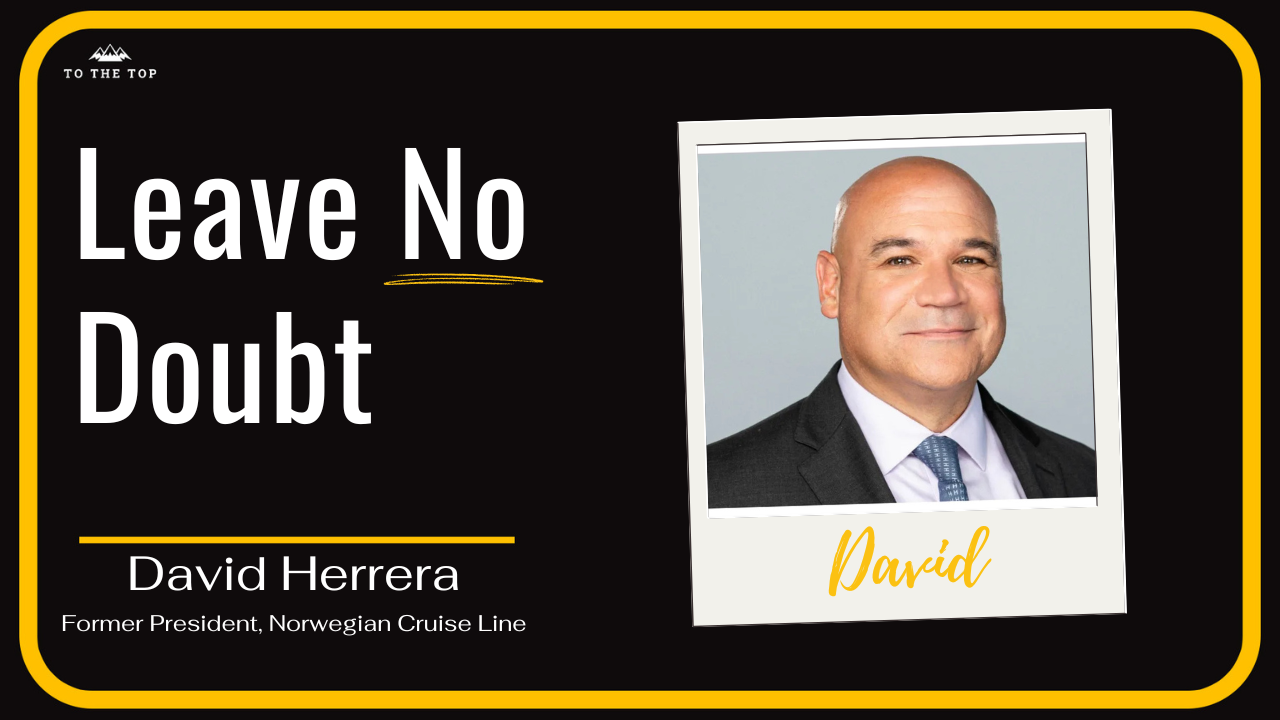
What if the values that made you who you are — resilience, service, empathy — could become the operating system for an entire organization?
Today's guest grew up in Hialeah, Florida, the son of Cuban immigrants who arrived in America with almost nothing and built everything through grit, integrity, and an unwavering belief that hard work is the price of admission. He lost his father at 12 years old, found his footing in the U.S. Army — where he'd eventually jump out of planes at night as part of an Airborne unit — and then quietly built one of the most storied careers in the travel industry.
David Herrera served as President of Norwegian Cruise Line, where over more than a decade he helped transform the company's commercial operations, led its expansion into China, and championed a genuine, veteran-driven military appreciation program that earned him letters, mugs, and thank-you notes from guests whose gratitude had nothing to do with the bottom line.
But what strikes you most about David isn't the titles or the milestones — it's that he leads the same way his mother lived, the same way his Army sergeant Mahoney taught him: from the front, with his word as his bond, leaving no doubt whose side he's on.
In this conversation, we talk about growing up in a Cuban immigrant household that embodied the American dream, what the military teaches you about trust and team that no MBA program can replicate, how he thinks about culture not as a poster on the wall but as the answer to the question — who's winning here, and why? — and what it really means to be a servant leader when the stakes are high.
In this episode we discuss:
Hire your manager, not just your job. The person above you shapes everything about your early career experience. Choose them wisely.
If you're not early, you're late. Punctuality is ultimately about respect — for other people's time and for the commitments you make.
Share the victory, own the setback. When things go right, celebrate the team. When things go sideways, step forward and take responsibility.
Culture is what gets rewarded. Not what's written on the wall — but who's winning in your organization and what it is about them that you actually respect and want to replicate.
Treat everything as a learning opportunity. Doesn't matter if you're painting parking lots in Miami heat or running a division — be in the moment, observe what works, and study what doesn't so you can avoid it.
Lead from the front. Never ask someone to do something you haven't done or aren't willing to do alongside them. That credibility is the foundation of real trust.
Know your foxhole friends. Who in your life both genuinely cares about you and is capable of showing up when it counts? That combination is rarer than most people realize.
Sometimes the right business decision comes at a personal cost. Separating emotion from judgment is one of the hardest and most important skills a leader can develop — and it never fully stops stinging.
SHOW NOTES
(0:00 – 4:30) Growing Up in Hialeah: The Cuban Immigrant Foundation David opens up about his parents leaving Cuba after Castro's regime and arriving in America with almost nothing. His father went from washing dishes to owning the first Cuban lunch truck in Miami — and then helped four or five of his friends do the same. His mother graduated top of her class at the University of Havana and started on a factory floor before working her way up. Together they eventually opened a small accounting practice in Hialeah, Florida. David reflects on what it meant to grow up watching that level of quiet, relentless work ethic up close.
(4:30 – 8:00) Losing His Father at 12 and the People Who Showed Up David's father passed away suddenly when David was just 12 years old. He shares how his mother and grandmother worked to keep life as normal as possible, and how the small gestures of people around him — a friend's father driving him places, a stranger stopping to take off his hat at the cemetery — left impressions that have lasted over 40 years. This section is one of the most emotional and human moments of the entire conversation.
(8:00 – 11:00) His Mother's Greatest Lesson: We Don't Take Charity After his father passed, the school offered to cover the cost of a class performance for David. When his mother found out, she marched down to the school and refused. "We don't take charity. We make our own way." David credits this moment as one of the defining lessons of his life — and the origin of the integrity and self-reliance that would shape his entire career.
(11:00 – 14:00) Faith, Community, and Two Years in Shanghai David talks about the role faith has played throughout his life — not as something he broadcasts, but as a source of grounding and community. He shares the story of moving his entire family to Shanghai in 2016 to launch Norwegian's China business, and how his wife Patty, his childhood sweetheart, turned what could have been a disruption into an adventure. One of the warmest sections of the conversation.
(14:00 – 17:30) First Jobs: Painting Parking Lots in Miami Heat David's first job was painting parking lot lines at his baseball coach's summer camp — in Miami, in the summer, bending over with a brush in the heat. By eighth grade he and a buddy had a side hustle painting offices. He reflects on what those early jobs taught him about being present, learning from every environment, and finding value in every experience regardless of the title.
(17:30 – 21:00) The Army, Airborne School, and What the Military Really Teaches You David enlisted right out of high school and eventually became part of a six-man Airborne long-range surveillance unit. He talks about what jumping out of planes at night actually feels like, why rugby is the closest civilian sport to the military experience, and what the armed forces give you that no MBA program can — an accelerated, unbreakable bond with the people beside you.
(21:00 – 25:00) Sergeant Mahoney: The Mentor Who Showed Up at Thanksgiving Two months into his posting in New York, David's team sergeant John Mahoney asked him what he was doing for Thanksgiving — and then simply told him he was coming home with him. That relationship became one of the most defining of David's life. The lesson Mahoney embodied: lead from the front, never ask someone to do something you haven't done or aren't willing to do alongside them, and let your word be your bond.
(25:00 – 29:00) Dartmouth, Finance, and an English Minor David chose Dartmouth for its culture of support over competition, and double dipped in finance and English — one for his career, one for his soul. He reflects on why feeling comfortable in your environment unlocks your best work, and how that realization shaped the kind of workplace culture he would eventually build at Norwegian.
(29:00 – 34:00) Defining Culture: What Gets Rewarded Is What Gets Repeated This is one of the richest sections of the conversation. David shares how he defines culture not by what's posted on the wall, but by looking at who's winning in your organization and asking why. He walks through several of Norwegian's cultural pillars including family first always, take your job seriously but not yourself, think like a guest but decide like an owner, and the one he's most proud of — leave no doubt whose side you're on.
(34:00 – 38:00) The Foxhole Friends Framework David reframes the concept of foxhole friends with a question that stops you cold: if you were sick and needed two people standing outside your door to make you feel completely safe — not just people who love you, but people who are also capable of showing up — who would they be? One of the most memorable and shareable moments of the entire episode.
(38:00 – 42:00) The Hardest Business Decision: Closing the China Office After building Norwegian's China operation from two employees to 65, achieving the highest-yielding product in the market within 18 months, and living two years in Shanghai with his family — David had to support the decision to shut it down. He talks honestly about the emotional cost of separating personal investment from business judgment, and why being united behind a team decision is itself a form of leadership.
(42:00 – 46:00) The Military Appreciation Program and the Mug That Meant Everything David shares one of his proudest accomplishments at Norwegian — creating a genuine, veteran-designed military appreciation program complete with challenge coins, pins, and a program built by veterans for veterans. The letters and emails that came back from guests, including a handmade mug from a veteran who just wanted to say thank you, represent exactly the kind of impact he set out to have.
(46:00 – 50:00) Great Stirrup Cay and the Next Chapter for Norwegian David gives a behind-the-scenes look at Norwegian's massive reinvestment in their private island, Great Stirrup Cay — a 28,000 square foot pool, a 170-foot tower, and a vision to give guests more freedom and flexibility than ever before. He describes what it feels like to work on a project of that scale across teams who didn't know each other but shared a vision.
(50:00 – 54:00) Rapid Fire + Parting Advice David closes with his best career advice — treat everything as a learning opportunity, hire your manager, be a sponge, and get to know everyone around you from the security guard to the maintenance staff. He also opens up about fishing as his mental health reset, patience as the thing he wishes he'd learned sooner, and what it means to go to sleep at night with only one voice in your head.
Key Quotes from This Episode
"If you're not early, you're late — and that's about respect."
"Culture is what's valued in your organization. Look at who's winning and ask yourself why."
"Who are your two people? The ones who not only love you, but are capable of showing up when it counts."
"Share the victory, own the setback."
"Leave no doubt whose side you're on."
"We don't take charity. We make our own way."