Omaid Homayun Omaid Homayun

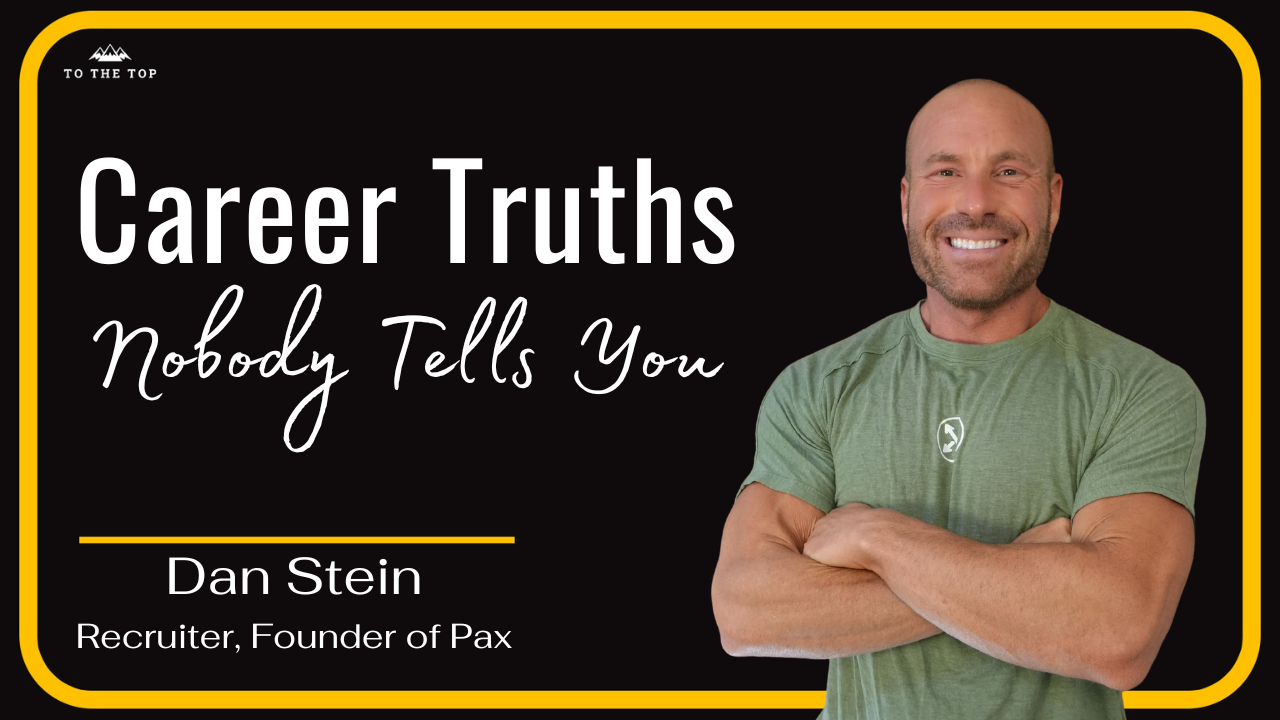
#125 Dan Stein: Career Truths Nobody Tells You

Dan Stein is a former recruiter at Google, SnapChat, and the VC firm A16Z. His wellness journey was featured in Men's Health and he launched an athletic apparel brand focused on mental health called Pax. Dan has also visited over 30 countries.

In this episode we discuss:

-The best career advice from a recruiter's perspective

-Why money is a renewable resource, advice from his dad that has helped him take more calculated risks

-How a cross-country move and a chance encounter with a waitress helped him land a job at Google

-Why "being seen" matters more than the perfect resume

-Why your manager can make or break your career

-The most important life lesson from visiting 31 countries

-What he means by 'finding what works for you' around health & fitness and more

Follow Dan on LinkedIn

Check out Pax’s website

Time-Stamped Show Notes

[00:00 - 08:30] Growing Up with Service-Minded Parents

  • Dan's mother: special needs teacher with 100% graduation rate

  • Dan's father: minister running home fellowships in Wisconsin

  • The "lead with love" philosophy that shaped Dan's worldview

  • Unconventional church experience and freedom of choice growing up

[08:30 - 15:45] Life Lessons from Dad

  • "Pay for good parking" - why convenience matters

  • "Money is a renewable resource" - eliminating financial anxiety

  • How faith informed the family's approach to money and provision

  • Growing up without extravagance but always having needs met

[15:45 - 20:30] Family Dynamics

  • Being second of four siblings

  • The only non-parent in the family

  • How being single allowed for more risk-taking and spontaneity

  • Career-driven vs. family-focused life paths

[20:30 - 35:15] The College Years: Battling Anorexia

  • First year at University of Minnesota: everything seemed fine

  • Sophomore year: when the eating disorder took over

  • 0.9 GPA and academic probation

  • The obsession: 6-7 hours daily in the gym, waking at 2 AM for cardio

  • Skipping classes to work out, severe food restriction

  • Moving home and swallowing pride to attend community college

[35:15 - 47:20] The Darkest Period & Path to Recovery

  • Working odd jobs: window washing, waiting tables, painting

  • Hiding the disorder, eating alone in his room

  • The pasta ritual: sucking off marinara sauce, spitting out pasta

  • Rock bottom in Georgia: freezing in summer heat, lips and nails blue

  • Doctor's intervention: "I think you have an eating disorder"

  • Weighing 132 pounds at 5'10"

  • The 21 signs of starvation (he had 20 of 21)

  • One failed therapy session in 2005

  • Choosing self-education: fitness magazines, medical journals, nutrition books

  • 4-5 years to full recovery in his mid-to-late twenties

[47:20 - 52:45] Men's Health Feature & Going Public

  • 2016: Submitting to Ultimate Men's Health Contest

  • The "How I Got Healthy" video series

  • Video crew at Gold's Gym Venice at 6 AM

  • Over 1 million views - 3x more than any other video

  • Almost making the cover (Michael B. Jordan got it instead)

  • "Me and Michael B. Jordan are in the same issue"

  • The lesson: people are more compassionate than we expect

  • 90% supportive comments vs. 10% negativity

[52:45 - 01:02:30] Breaking Into Sports: The Milwaukee to Oakland Journey

  • Dream of becoming a baseball GM

  • Reading John Schuerholz's book about the Atlanta Braves dynasty

  • Realizing the grind wasn't for him

  • Cold calling every MLB team's director of sales

  • Billy Fries responds: 9 months at $9/hour in a utility closet

  • Leading the sales board at Milwaukee Brewers

  • Job interviews: Charlotte Bobcats, Cleveland Cavaliers

  • Taking Oakland A's job over the phone, sight unseen

  • $24,000 salary (harsh Bay Area reality)

  • Cross-country drive with his dad

[01:02:30 - 01:08:45] The Raiders & Meeting Al Davis

  • Getting laid go by the A's the day after Opening Day (seasonality lesson)

  • Dad's advice: "Give it three weeks"

  • Landing Raiders job within two weeks

  • Meeting Al Davis coming out of the bathroom

  • The famous Lane Kiffin press conference

  • Al Davis passing away - phones ringing with fan stories

  • The outpouring of love for a maverick owner

  • Seeing John Madden at practice and around the facility

[01:08:45 - 01:15:30] The Google Break: A Serendipitous Connection

  • Meeting Allie, the waitress at a Minnesota Gophers bar in San Francisco

  • Getting her number, getting ghosted

  • 3.5-4 years later: Facebook message about a Google sales job

  • "What do you know about Google?" "You guys got the search engine"

  • Seeing the campus paradise: people on lawns, free food, cafes

  • Job offer on the drive home from the interview

  • Starting on Google Offers (Google's Groupon competitor)

  • Team gets laid off after 6-7 months

  • Moving to AdWords new business sales

[01:15:30 - 01:22:15] Making the Pivot: Sales to Recruiting

  • 4-5 years in sales, feeling the quota climb fatigue

  • Not growing professionally, losing motivation

  • Browsing internal job board: Project Aura (Google Glass evolution)

  • Lunch with Jose: treating it as conversation, not interview

  • Not trying to impress, just learning about recruiting

  • Job offer while at the Arnold Fitness Expo

  • 12 years in recruiting since that pivot

[01:22:15 - 01:30:45] Job Market Reality Check

  • Agreeing the job market is incredibly challenging

  • The problem: too many bad recruiters as gatekeepers

  • AI bots reviewing resumes for keywords

  • From 200-300 applications per week to 1,200-1,500 in 2-3 days

  • The key: YOU HAVE TO BE SEEN

  • Tactical advice: Find people on LinkedIn in the department

  • Send connection requests, ask about their experience

  • End with: "Can you pass my resume to the hiring manager?"

  • The importance of preparation (referencing the Blackberry story)

  • Knowing your opponent: research the company, market, history

[01:30:45 - 01:35:20] The Preparation That Wins Jobs

  • Story of two final candidates at a multi-billion dollar company

  • Winner: came in with more market information than the CEO knew

  • Showed the future, not just past accomplishments

  • Preparation differentiates you from other qualified candidates

[01:35:20 - 01:40:30] Salary Negotiation in the Age of Transparency

  • Negotiation has changed: you're not negotiating with a person, but with the internet

  • Pay transparency laws have leveled the playing field

  • Advice #1: Be realistic with your ask

  • Don't ask for $300K when offered $200K

  • Advice #2: Only negotiate when ready to accept

  • Say: "I want this job. If you meet me at X, I'll sign today"

  • Makes it easier for them to get approval internally

[01:40:30 - 01:45:15] Greatest Google Memories

  • Professionally: the brilliance of people

  • Onboarding circle: Stanford, Stanford, Cal, Harvard, MIT... "University of Wisconsin Milwaukee"

  • Learning from the smartest people on the planet

  • Personally: first company holiday party at SF MoMA

  • Black tie event with penguins wandering around

  • Caviar, fine wines, champagne

  • Eating sushi in front of the fish tank

  • Coming from Raiders parties at the facility

[01:45:15 - 01:52:30] Working with Founders at Andreessen Horowitz

  • Job: partnering with seed-stage founders

  • Often just founder and co-founder, no other employees

  • Two key competencies of great founders:

    1. Coachability - open to feedback and coaching

    2. Hire experts and let them be experts - don't micromanage their expertise

  • The design example: if you're not a designer, don't critique design

  • Lean on your network for assessments

  • Critical insight: first hires determine success more than founders

  • Don't half-ass early hires or rush them

[01:52:30 - 02:00:45] Building PACS Activewear

  • 15-16 years passionate about health and wellness post-recovery

  • Started researching 3 years ago with friend Aaron (met at gym)

  • Both used gym to manage mental health

  • Noticed gap: no activewear brand connecting mental and physical health

  • February 2023: got logo back (first milestone)

  • May 2024: official launch (almost 2 years)

  • Self-funded, no investors, no marketing team

  • Does all shipping from storage locker himself

  • "A success because of the people I've met, not financially"

  • Current focus: selling existing inventory and brand message

[02:00:45 - 02:05:30] The Hardest Part of Entrepreneurship

  • Biggest struggle: social media and branding

  • Doesn't enjoy being active on Instagram/TikTok

  • Yet that's where small niche brands must live

  • Lack of motivation for 30-45 minutes creating perfect reels

  • This year's commitment: more posting, more focus on brand message

  • Regret: not leaning into being the living embodiment of the brand

  • Uncomfortable talking into phone and posting videos

  • Working to overcome that discomfort

[02:05:30 - 02:15:45] Dan's Wellness Philosophy

  • Core principle: Find what works for YOU

  • No universal approach to health and wellness

  • It took years to figure out what works for his body

  • Patience is key - not overnight, not even 30 days

  • 30-day challenges often do more harm than good

  • People quit when they don't see expected results

  • Progress is lots of little steps, not large leaps

  • Celebrate small wins

  • Don't let fitness restrict your ability to live and be social

[02:15:45 - 02:22:00] A Day in Dan's Life

  • Wakes at 5:45 AM (used to be 4:45-5:00 AM)

  • Lives 25 seconds from his gym

  • Morning routine: devotional, Bible, pre-workout

  • 75-90 minutes lifting (focused, not chatting)

  • Plus cardio: 90 minutes to 2 hours total

  • Aims for 8 hours sleep (never sleeps through the night)

  • Wakes 2-4 times per night but falls back asleep quickly

  • Screens off 15 minutes before bed

  • Prays every night before sleep

  • Never had a TV in bedroom

[02:22:00 - 02:28:15] Nutrition & Eating Philosophy

  • Doesn't eat until midday (around noon or 1 PM)

  • First meal: egg whites, chicken breast, brown rice, sweet potatoes, oatmeal, berries

  • Dinner: rotating protein (steak, shrimp, fish), vegetables, healthy carbs

  • 80/20 rule: 80% clean/healthy, 20% whatever

  • Loves cooking as a way to unwind after work

  • 3,500-4,000 calories per day

  • Goes out with friends without restriction

  • Always orders dressing on the side

  • Dinner by 5:30-6:00 PM (won't do 9:30 PM dinners)

  • Evening snack before bed

[02:28:15 - 02:32:30] Supplements & Sleep Support

  • Started GABA 2-3 years ago for sleep

  • Able to fall back asleep quickly

  • Standard supplements: creatine, BCAAs, CLA (conjugated linoleic acid), glutamine

  • Recently: NAD+ peptide and TB-500 for muscle injuries

  • TB-500 helped forearm injury

  • NAD+ eliminated afternoon mental fog/wall

  • Unsure if creatine/pre-workout is placebo, but feels better when taking it

  • Coffee connoisseur, multiple cups daily (none after 1 PM)

[02:32:30 - 02:36:45] Typical Meals & Snacks

  • Baby carrots: could eat 3 bags a day

  • Cottage cheese (slow-digesting casein protein)

  • Lesser Evil popcorn (favorite before-bed snack)

  • Recently: protein waffles (nostalgic for childhood Eggos)

  • Tried Kodiak (tasted like cardboard)

  • Settled on Eggo protein waffles

  • Swore off protein powders years ago (wreaked havoc on stomach)

  • Tried all types: whey, casein, pea, soy, beef

  • Chose whole food proteins instead: chicken, fish, eggs, yogurt

[02:36:45 - 02:40:30] Intermittent Fasting Experience

  • Tried eating only 3 PM - 8 PM for 6 months

  • Eats 3,500-4,000 calories daily

  • Dinner could be 2,000 calories

  • No indigestion issues or fat storage noticed

  • But also no massive energy boost

  • Didn't work for him, but great if it works for others

  • Key: unlock what works and stick with it

[02:40:30 - 02:45:15] Workout Philosophy & Routine

  • Started following magazine routines (Men's Health)

  • Now creates own routines, switches every 2-3 months

  • Doesn't require massive changes - minor tweaks work

  • Change rep ranges, grips, barbell to dumbbell

  • Keep body in confusion to force adaptation

  • Body is incredibly efficient - must trick it to change

  • If doing same thing repeatedly, body builds just enough muscle to sustain

  • Confusion forces body to build more muscle to survive

[02:45:15 - 02:48:30] Rapid Fire: What He Knows Now at 43

  • Wish he knew at 35: It's okay to still be single

  • Midwest pressure: married by 25 or something's wrong

  • At 35: no marriage, no house, no kids - "what went wrong?"

  • Now 43: still no kids, never married, has house (doesn't live in it)

  • Everyone's timing is different

  • No universal timeline despite what society tells us

[02:48:30 - 02:55:45] The Hardest Loss: His Dog

  • Put dog down Christmas morning last year

  • Only dog that was truly "his dog"

  • His life companion as someone never married

  • Cried in car for 45 minutes

  • Lost dad earlier same year

  • Cried more for dog than dad (felt guilty about this)

  • Research: love with dogs accesses different part of brain

  • Dogs provide truly unconditional love

  • Over a year later, still gets emotional

  • Corgi in coffee shop triggered him recently

  • First time experiencing real grief at 42

[02:55:45 - 02:59:00] Processing Grief

  • Lost two very important beings in same year

  • Time helps, but grief isn't linear

  • Focus on positive memories

  • It's okay to cry in public

  • Broke down on StairMaster when Eric Clapton's "My Father's Eyes" played

  • Dad's favorite musician

  • Didn't get embarrassed, just let it happen

  • Found it cleansing

[02:59:00 - 03:01:30] Book Recommendation

  • The Giving Tree by Shel Silverstein

  • Parents introduced it at age 7-8

  • Story of tree's relationship with kid as he grows

  • Tree gives everything: branches, fruit, trunk

  • Ends as just a stump

  • Kid returns as old man needing place to sit

  • Tree offers the stump

  • Lesson: no matter how much you give, there's always something more you can give

  • Green cover with bright red apple

[03:01:30 - 03:04:45] Current Favorite Show

  • Landman (Paramount+) starring Billy Bob Thornton

  • From Taylor Sheridan (creator of Yellowstone)

  • Reminds him of Friday Night Lights (favorite formative show)

  • Focuses on average everyday American life

  • Not sensationalized with violence/drugs/sex

  • Well-written character relationships

  • Moments remind him of his family and siblings

  • Less about overarching story, more about characters

[03:04:45 - 03:12:00] Career Advice: Three Key Principles

1. Trust Your Direct Manager

  • Most important factor when choosing a job

  • Manager holds many cards for your success

  • Will they have your best interest at heart?

  • Will they fight for you with upper management?

  • Or are they using you as means to their advancement?

  • Bad managers climb ladder on backs of others

  • More important than compensation (all else equal)

  • You're working to make some billionaire richer anyway

2. It's Okay Not to Love Your Job

  • Don't need to wake up excited every morning

  • Society says quit if you don't love it

  • Not everyone needs to be passionate about their work

  • Some people just "get to 5 PM"

  • But still give it your all, even if you don't love it

  • Not loving your job doesn't mean quit tomorrow

  • Commit to giving your best every single day

3. Don't Get Caught Up in Office Politics

  • Mind-numbing and exhausting

  • Will exist in most places (fact of life in American capitalism)

  • Don't let your career define who you are

  • US obsession: "What do you do?" is first question to strangers

  • Travel abroad: people rarely ask about your job

  • For Dan: doesn't want to be known as "a recruiter"

  • But if career defines you, that's also fine - personal choice

[03:12:00 - 03:15:30] Travel Wisdom: Happiness with Less

  • Most life lessons from travel: seeing happiness with so little

  • Story from Zimbabwe safari

  • Guide Claude: never left his village beyond 20 miles

  • Been to 3 countries only because borders merge in Victoria Falls

  • Never on plane or train

  • Couldn't be happier

  • "Best office in the world"

  • Lesson: happiest people often have very few material belongings

  • What matters: being around people they care about, simplicity of life

  • US materialism vs. global perspective

[03:15:30 - 03:17:00] Closing Thoughts

  • Importance of preparation in tough job market

  • Stand out by being 10x more prepared

  • Do reflection on what's important to you

  • Over-prepare for every situation

  • Deep gratitude for the conversation

Read More
Omaid Homayun Omaid Homayun

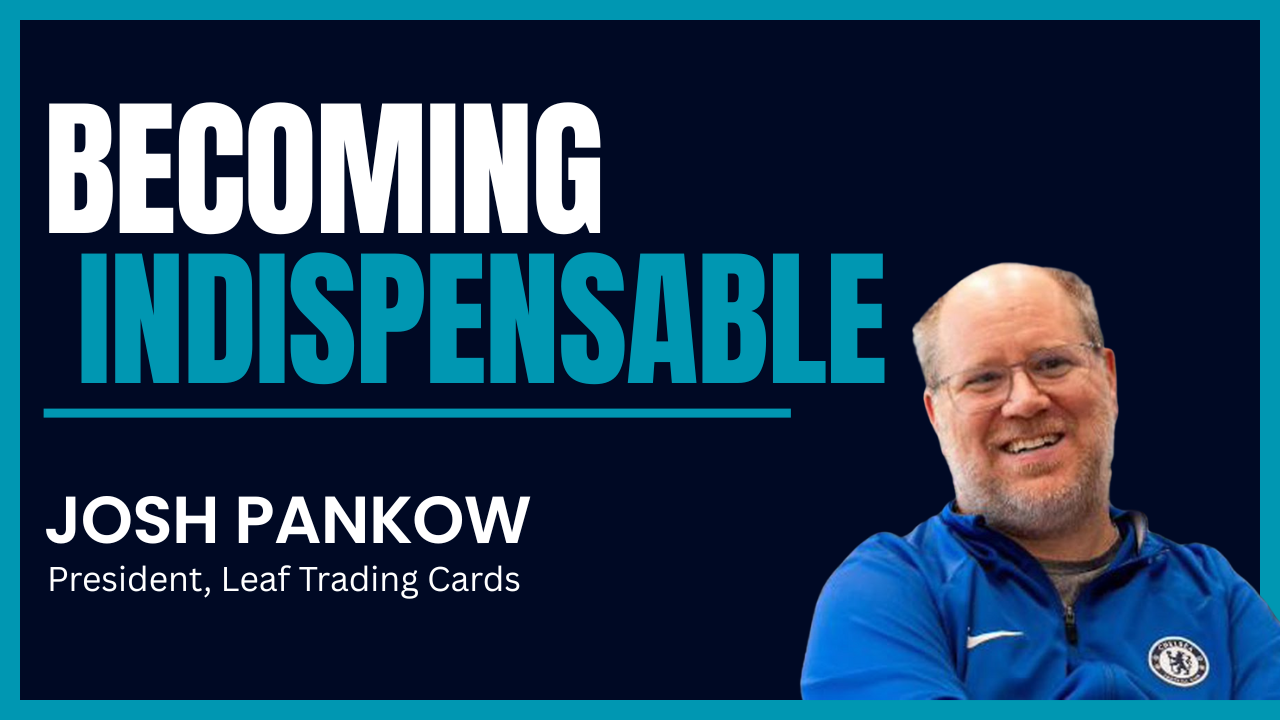
#124 Josh Pankow: Becoming Indispensable

My guest today is Josh Panko, President of Leaf Trading Cards. Josh's journey in the sports card industry started at age seven when he opened a card shop in his basement. That childhood passion turned into a remarkable career that's taken him from working at card shops as a teenager, to Upper Deck's product development team, to now leading one of the most creative trading card companies in the industry.

What I love about Josh's story is how he built his career by working every angle of the business—retail, distribution, manufacturing, customer service. He learned the entire supply chain, which gave him a perspective that few in the industry have. And today, at Leaf, he's creating some of the most innovative products in the space, from on-card autographs of Hollywood legends like Al Pacino and Clint Eastwood, to unique sports card concepts that major licensed manufacturers can't touch.

This conversation is packed with wisdom on hard work, taking initiative, building relationships, and staying humble even as you climb the ladder. Whether you're in the trading card world or not, Josh's lessons on career development and leadership are gold.

In this episode we discuss:

  • Why working every level of your industry early in your career creates an unfair advantage - and how Josh's experience in retail, distribution, and manufacturing shaped his leadership at Leaf

  • The handwritten letter strategy that landed Josh his dream job at Upper Deck - and why his father's unconventional advice to FedEx overnight it to the CEO actually worked

  • How being kind to everyone (especially people outside your department) can fast-track your career - Josh's finance department friendships got his projects prioritized over senior colleagues

  • Why Josh would rather employees take initiative and make mistakes than wait for permission - and the Shawshank Redemption lesson about not asking to go to the bathroom

  • The "harder you work, the luckier you get" philosophy - and how Josh turned clocking out at 5pm then returning to work unpaid into career-defining opportunities

SHOW NOTES

[00:00] Introduction

  • Josh's journey from 7-year-old card shop owner to President of Leaf Trading Cards

[02:15] The Origin Story

  • Opening a card shop in his basement at age seven

  • Weekly trips to the card shop with his mom during grocery runs at Winn-Dixie

  • The 1989 Upper Deck Ken Griffey Jr. card that changed everything

  • Getting a $5 allowance and learning to wheel and deal

[08:30] Early Business Lessons

  • Setting his own prices without Beckett guides

  • Understanding supply and demand as a kid

  • How his sales-oriented dad influenced his entrepreneurial spirit

  • Working neighborhood card shows and building inventory

[15:45] The Philosophy of Pricing and Value

  • Why modern pricing comps are still arbitrary

  • Comparing card pricing to buying a house

  • Advice for buying cards: focus on what you want, not speculation

  • The safety of eBay's authentication process

[22:10] The Grading Game

  • When Josh first encountered card grading in the early 2000s

  • The shift from Beckett to PSA dominance

  • Why a PSA 10 isn't necessarily "harder" than other 10s

  • The conflict of interest in Fanatics owning grading companies

  • When vintage cards justify premium grading costs vs. modern cards

[35:20] Family and Work Ethic

  • How his parents shaped his approach to work

  • His dad selling baby diapers and being a natural salesman

  • Mom as a stay-at-home Cubs fan

  • Teaching his own kids (ages 6 and 10) to appreciate hard work

  • Fighting against instant gratification culture

[42:00] The LeBron James Standard

  • Why LeBron arriving 10 hours before games matters

  • The compounding effect of consistent effort over 20 years

  • How God-given talent still requires incredible work ethic

  • Durability and longevity in any profession

[48:30] Getting the Upper Deck Job

  • His dad's unconventional advice: handwrite a letter and FedEx it overnight

  • Why the letter strategy worked when online applications wouldn't

  • The 8-month hiring process from January to August

  • Starting in product development and learning the business

[54:15] Working at Upper Deck

  • Clocking out at 5pm then going back to work unpaid

  • Choosing learning and experience over overtime pay

  • Helping every department to understand the full business

  • Making himself invaluable across the company

  • Building relationships with finance, acquisitions, and customer service

[01:02:00] The Move Back to Atlanta

  • Leaving Upper Deck after a year to open his own card shop

  • The smooth departure and maintaining relationships

  • Running an eBay business from his college apartment

  • Having UPS pickup from his apartment building

  • Working every angle: retail, distribution, wholesale, manufacturing

[01:08:45] Understanding the Full Supply Chain

  • Why working at all levels gave him an unfair advantage

  • The distributor role most people don't know exists

  • How distributors buy bulk and take financial risk

  • Why they're the wealthiest (and most invisible) people in the industry

  • Learning from the customer service side and the manufacturing side

[01:15:30] The Path to Leaf Trading Cards

  • Knowing the previous owner and doing consulting work

  • Starting at Razor Entertainment in 2006

  • Becoming President about two years ago

  • Why he loves the creative manufacturing side

  • Watching the French Open as part of his job

[01:20:00] Lessons from Upper Deck Applied at Leaf

  • Getting his hands in everything, not staying in his lane

  • The two mentalities: "I'm not paid enough so I won't do extra" vs. "I'm not paid enough so I need to show what I can do"

  • Understanding finance, acquisitions, customer service, and design

  • Making yourself invaluable while staying humble

  • His dad's reminder: "No one is irreplaceable" - even Steve Jobs

[01:28:15] The Secret Sauce at Leaf

  • Creativity and innovation without league licenses

  • Creating cards that Fanatics and Panini can't make

  • The Patrick Mahomes + Lionel Messi + Aaron Judge triple autograph

  • Keeping products affordable ($125-$200 boxes vs. $1,000+)

  • Hand-collating every single box for consistent value

[01:33:45] Greg Cohen: The Product Mastermind

  • How his former Upper Deck colleague became Leaf's head of product development

  • Greg's incredible creativity and humble nature

  • The "Pieces of the Past" shadow box cards

  • Moment cards: The George Brett Pine Tar incident with Goose Gossage

  • Creating unique inscriptions and concepts that stand out

[01:40:20] Pop Culture Cards

  • The product Josh is most proud of

  • Autographs from Margot Robbie, Clint Eastwood, Al Pacino, Robert De Niro

  • Dwayne "The Rock" Johnson wardrobe swatches

  • Back to the Future cast autographs

  • Working Dallas Fan Expo to get Michael J. Fox, Huey Lewis, and Star Wars cast

  • Creating something truly unique with no competition

[01:48:00] The Power of Being Nice

  • Why treating people with respect goes so far

  • Building relationships with agents, players, and vendors

  • The company motto: everyone represents Leaf at shows

  • Firing people with dignity and respect

  • Sending employees home early on Fridays as a small gesture

  • Supporting employees through family emergencies

[01:55:30] Career Advice for Young People

  • Show up on time (no Starbucks excuse)

  • Be nice and respectful to everyone

  • Take initiative without waiting for permission

  • The Shawshank Redemption bathroom analogy

  • Don't be afraid to make mistakes - just take responsibility

  • Don't take credit for wins if you won't take responsibility for losses

  • Athletes who play "not to get injured" get injured - same with work

[02:02:00] Final Thoughts

  • Put in the work early so you have freedom later

  • The harder you work, the luckier you get

  • Why instant gratification is killing work ethic

  • Teaching the next generation to appreciate effort

Read More
Omaid Homayun Omaid Homayun

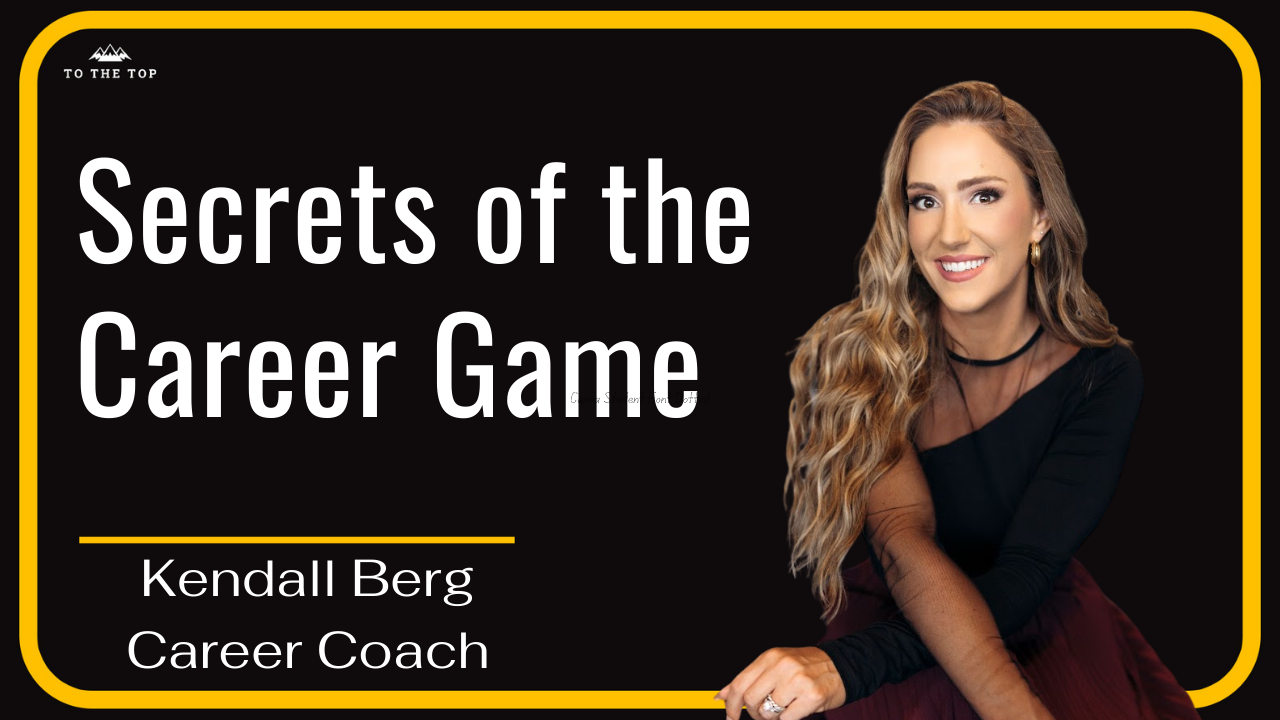
#123 Kendall Berg: Secrets of the Career Game

Kendall Berg is a career strategist and author of Secrets of the Career Game who helps ambitious professionals navigate corporate politics with integrity and transform strong performance into visible, undeniable value. After being told early in her career that "everybody loves having you on their team, but nobody likes working with you," she dedicated herself to learning the unspoken rules of advancement—and was promoted five times in six years. Now, through her coaching practice and her tactical, no-nonsense approach, Kendall teaches thousands of clients across 27 countries how to earn more, advance faster, and feel in control of their career trajectory without burning out or losing themselves in the process.

In this episode, you'll discover:

  • Why your boss has NO idea what you're actually doing—and the weekly habit that fixes this blind spot

  • The one person you must talk to during interviews that reveals the REAL company culture (hint: it's not the hiring manager)

  • How asking for help makes people think MORE highly of you—the counterintuitive psychology that changes everything

  • The "influencer list" strategy: Why you're networking with the wrong people and how to identify the 5 who actually control your career

  • Why 82% of jobs are filled before they ever hit the job board—and what to do about it

Time-Stamped Show Notes

[00:00] Introduction & Book Feedback

  • Initial response to Secrets of the Career Game

  • Why the book is written as a tactical textbook, not theory

  • The importance of actionable advice readers can implement immediately

[03:15] Interviews That Stand Out

  • Discussing the unspoken rules and corporate politics

  • Navigating interpersonal conflict and toxic coworkers

  • The mental load of difficult workplace relationships

  • When survival mode is the only option

[07:30] Kendall's Origin Story

  • Growing up with a tech sales father who made her do business cases for everything

  • Learning to communicate ROI from childhood

  • Studying mathematics and economics

  • Starting career as a data scientist and analyst

  • The skill that mattered most: communication

[12:45] Lessons from Parents

  • Mom's philosophy: "You might as well try it"

  • Getting out of your own way

  • Failure as the start of something new, not the end

  • Starting businesses early and learning from failure

  • The importance of persistence over perfection

[17:20] Moving 20+ Times Before High School

  • Attending four elementary schools, two middle schools, two high schools

  • All within a 5-8 mile radius

  • How constant change built adaptability

  • Learning to build relationships quickly

  • The one move Kendall requested herself

[22:40] The Inflection Point to Career Coaching

  • The VP who told her: "Everybody loves having you on their team, but nobody likes working with you"

  • Choosing growth over defensiveness

  • Meeting with female mentor Allison

  • The transformative advice: spend 2-3 minutes on small talk

  • Getting promoted 5 times in 6 years

[28:15] The CFO Job She Turned Down

  • Being offered a CFO position at 29, six weeks after having her daughter

  • Why her "dream job" was actually misaligned

  • Understanding the difference between title and fulfillment

  • The importance of self-assessment before accepting roles

  • When they referenced her age in the offer

[34:00] How to Do Due Diligence on a New Job

  • The power of talking to a peer, not just the hiring manager

  • What to ask: promotion timelines, mistake handling, mentorship

  • Why peers have no incentive to lie to you

  • Red flag: when companies refuse peer conversations

  • Asking to speak with 8 peers before accepting her current role

[40:30] The Samsung Interview Story

  • Four hours of back-to-back interviews

  • "I sleep 4-5 hours a night"

  • The "crazy range" salary negotiation tactic

  • Learning about "dispatchers" who report back to Korea

  • Choosing culture fit over compensation

[45:20] Ghost Culture vs. Real Culture

  • What executives think culture is (cereal bars, nap pods)

  • What employees actually experience day-to-day

  • The Google commercial that changed corporate perks

  • Why subcultures matter more than company culture

  • Your direct manager creates your real experience

[50:45] Building Your Influencer List

  • Identifying 20 people who have influence over your career

  • Evaluating them on seniority, power, and "fear factor"

  • Narrowing down to your top 5

  • Meeting with 20 executives quarterly on rotation

  • Why most career conversations happen without you in the room

[57:10] The Client Who Got 6 Job Offers

  • Three months, 60 coffee chats across 5 target companies

  • Meeting everyone from janitors to CEOs

  • Nothing happened during the holidays

  • February: 6 simultaneous job offers

  • The power of relationship-first, application-second

[01:01:30] People Who Help You Think More Fondly of You

  • The umbrella analogy

  • Why asking for coaching makes others feel invested in you

  • Overcoming the fear of "bothering" people

  • Most people feel flattered when asked for help

  • Breaking the misconception that asking for help is manipulative

[01:06:45] Playing the Career Game with Integrity

  • Why "playing the game" gets a bad reputation

  • Learning the rules vs. playing by them

  • When Kendall chose NOT to falsify financial reports

  • Understanding the game lets you opt out intentionally

  • Building authentic relationships that benefit both parties

[01:10:20] The Hard Truth: Your Boss Doesn't Know What You're Doing

  • The hardest career secret to navigate

  • Weekly updates are essential, not optional

  • The balance between educating your boss and seeming haughty

  • Why visibility matters more than performance alone

[01:12:40] Career Advice for Her 30-Year-Old Self

  • "The other person is also right"

  • Getting out of victim mentality

  • Taking accountability creates emotional distance

  • Asking: "What are your expectations for me?"

  • Solving problems by understanding others' perspectives

[01:15:25] The Toxic Boss Who Falsified Reports

  • Working in finance with ethical dilemmas

  • Losing confidence in her own capabilities

  • Almost becoming a high school math teacher

  • Why she had to live through it to learn from it

  • The setback that taught her the career game

[01:19:50] Balancing Career Success and Family

  • There's no such thing as work-life balance

  • Work and life exist in seasons

  • The terrible advice: "You can't have everything as a mother"

  • Establishing boundaries vs. maintaining them

  • When exceptions become the new boundary

[01:24:30] Trade-Offs and Saying No Constructively

  • Presenting alternatives instead of just declining

  • "I can't stay late tonight, but I can be on early tomorrow"

  • Why most leaders will support your boundaries

  • The importance of communicating trade-offs

[01:27:15] Self-Care: Paint by Numbers

  • Finding zone-out activities that work for you

  • Mother-daughter creative time

  • Numbers-based creativity for analytical minds

[01:29:00] Book Recommendations

  • Seven Habits of Highly Effective People (reads annually)

  • Unspoken Truths for Career Success by Tessa White

  • How to Win Friends and Influence People (reread this year)

  • The Sword of Truth series (the reason she got married)

  • Favorite habit: Listen first and seek to be understood

[01:32:45] Rapid Fire Career Advice

  • For someone 5 years into their career

  • Relationships first: build them, keep in touch

  • Get comfortable with the second-best solution

  • If someone else's idea solves the problem, roll with it

  • Collaboration over being "right"

[01:35:20] The Nine Box & Final Thoughts

  • Every company plots you on a performance chart

  • Individual contributors never see it

  • Why transparency would help everyone

  • The importance of knowing how you're evaluated

  • Staying connected beyond the interview

Check out Kendall’s website: www.thatcareercoach.net

Read More
Omaid Homayun Omaid Homayun

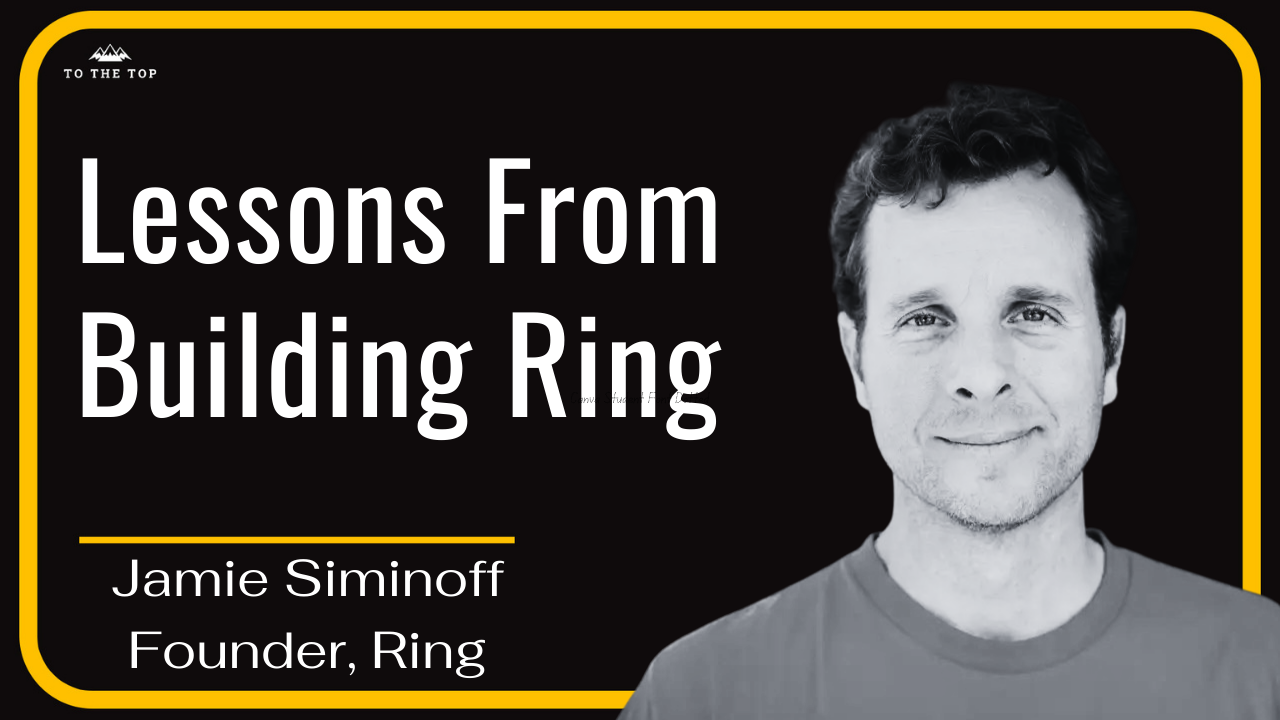
#122 Jamie Siminoff: Lessons From Building Ring

Jamie Siminoff is the CEO and founder of Ring, the camera company that transformed home security. While his viral Shark Tank episode didn't yield a deal from the sharks, it launched the video doorbell company. In 2018, Ring sold to Amazon for $1 billion. Jame published a book titled Ding Dong: How Ring Went from Shark Tank Reject to Everyone's Front Door

In this episode we discuss: 

-the greatest lessons from his failures
-the 1 question he'd ask James Dyson in an elevator
-why often the most important decisions are the ones we say "no" to
-how the best thing that never happened was not getting acquired by ADT
-what he learned about the relationship between money and happiness
-the best career advice he ever received
-the nicest thing anyone has ever done for him and more

PODCAST SHOW NOTES:

Key Timestamps

[00:00] Opening & Growing Up in New Jersey

  • Jamie's childhood in Chester, New Jersey

  • The nature vs. nurture debate on entrepreneurship

  • Growing up with freedom and access to tools in the basement

  • The "back by dark" generation vs. today's parenting

[03:30] Parenting Philosophy & Life Lessons

  • Greatest lesson from Jamie's parents: treating him like an adult

  • Letting kids be who they want to be (Oliver's sports photography journey)

  • Rejecting college stress and performance pressure

  • Supporting children without forcing them into predetermined paths

[07:00] Failure as Learning & The DoorBot Story

  • Reframing failures as "learnings"

  • How DoorBot (Ring's predecessor) taught valuable lessons despite commercial struggles

  • The importance of being public with failures to accelerate learning

  • Why perfect products don't exist on day one for true innovations

[10:15] Elevator Questions: Advice for a 25-Year-Old

  • Finding what you're passionate about when you're young and responsibility-free

  • The difference between a "job" and meaningful work

  • Why purpose matters more than paychecks

[11:30] The James Dyson Question

  • Jamie's admiration for Dyson as his "mentor I haven't met yet"

  • Understanding how Dyson thinks about entering new markets

  • The power of authenticity in brand building

  • Why Dyson still vacuums his own house

[14:00] Building Authentic Brands

  • Why authenticity is the foundation of great brands (Nike, Dyson, Ring)

  • The Jersey grit mentality

  • You can't buy authenticity—it comes from genuine purpose

[16:45] The Art of Saying No

  • Most important decisions are the ones you decline

  • Turning down private label deals to maintain customer relationships

  • Building long-term value vs. short-term revenue

  • The difficulty of saying no when you're desperate

[19:30] Decision-Making Framework

  • Being willing to make wrong decisions and course-correct

  • Having a clear North Star (Ring's: own the customer relationship + make neighborhoods safer)

  • The ADT meeting that never materialized—why it was the best thing that didn't happen

  • Why small companies often die when acquired too early

[23:00] Money & Happiness

  • Going from zero to significant wealth in 60 days

  • Being "all in"—Ring was 100% of Jamie's net worth

  • Borrowing money for the closing party after signing with Amazon

  • Why money's impact is temporary but purpose endures

  • What truly motivates people to stay at companies for 15 years

[27:30] Looking Ahead: Fatherhood in 10 Years

  • Hopes for relationship with Oliver at age 27

  • Supporting children to fully achieve what they want for themselves

  • Staying best friends and traveling together

[28:30] Best Career Advice Ever Received

  • Be very careful with advice—everyone is unique like a fingerprint

  • Listen and learn from everyone, but filter through your own lens

  • Advice from one person's perspective doesn't automatically apply to yours

[30:00] Wisdom from Age 40 to Now

  • Wish he understood investing and compounding earlier

  • The power of the S&P 500 and long-term wealth building

  • Brad Gerstner's Invest America initiative (teaching kids to invest)

  • It's harder to keep money than make money

[33:00] Acts of Kindness

  • Story of a stranger providing an AC unit during a Bay Area heat wave

  • Mark Schuster's unwavering support during Ring's darkest moment

  • The importance of showing up for people

  • Real legacy: how many people say you changed their life

[37:00] Luck vs. Skill: The Lottery Ticket Theory

  • Shark Tank as the ultimate lottery ticket (30,000+ applicants)

  • Hard work buys you more lottery tickets, but doesn't guarantee winning

  • Seeing smart, hardworking people with great ideas not make it

  • The phenomena of Ring becoming the largest company ever on Shark Tank

[40:00] Closing Thoughts

  • The power of brand awareness and timing

  • Resourcefulness as a core trait

  • Learning and adjusting on the fly

Read More
Omaid Homayun Omaid Homayun

#121 Patrick Mouratoglou: Building Unshakeable Confidence

Patrick Mouratoglou is one of tennis's most successful and unconventional coaches, known for his work with Serena Williams during her dominant return to form—helping her win 10 Grand Slams and reclaim the world number one ranking. But his journey to the top began in the darkest of places: a childhood marked by crippling shyness, zero self-esteem, and such severe social anxiety that he couldn't make eye contact without fear of vomiting. When his dream of becoming a professional tennis player was crushed at 15, that rock bottom moment became the catalyst for an extraordinary transformation. Today, Patrick coaches the next generation of champions, founded the innovative Ultimate Tennis Showdown (UTS), and has written a book about the "progress zone"—the space where confidence is built through small, daily victories. His approach to coaching is refreshingly transparent in a sport known for secrecy, and his insights on building champions apply far beyond the tennis court.

What You'll Learn in This Episode:

  • Why the worst thing that happens to you might be the best thing—how Patrick's devastating rejection at 15 became the turning point that saved his life and launched his coaching career

  • The hidden truth about motivation—why players (and people) who seem "unmotivated" are actually protecting their confidence, and what really drives elite performance

  • How to rebuild someone's confidence from zero—Patrick's unconventional methods, including secretly rigging matches to create winning streaks and psychological breakthroughs

  • What separates champions from great players—the mindset traits of Serena Williams, Roger Federer, and Novak Djokovic that have nothing to do with talent

  • The art of hearing what people think, not just what they say—Patrick's most powerful coaching skill and why "the weather is nice" means completely different things in London versus Miami

Show notes:

[00:00] Introduction

  • Patrick's background and current work with rising star Holger Rune

  • The importance of coaches in sports

[05:30] The Darkest Chapter: Childhood Struggles

  • Growing up with severe social anxiety and zero self-esteem

  • Being physically sick from stress, unable to make eye contact

  • School as a daily nightmare of failure and humiliation

  • Tennis court as the only safe space

[12:15] The Turning Point: When Dreams Collapse

  • Being denied the chance to pursue professional tennis at age 15

  • How devastation became the "kick in the ass" needed to change

  • Starting 10 years of therapy while building confidence through action

  • The concept of "little victories" and daily progress

[20:45] The Power of Rock Bottom

  • Why the worst moments can provide the best opportunities

  • Developing empathy and communication skills through isolation

  • How early struggles shaped his coaching philosophy

  • Learning to put yourself in others' shoes

[28:00] Building Confidence from Zero: The Anna Story

  • Coaching a player with no self-esteem

  • The unconventional method of secretly rigging matches to build winning streaks

  • Why you can't build confidence without victories

  • The importance of creativity when you lack traditional coaching tools

[35:20] Coaching Serena Williams: The Reconnection

  • Joining Serena after two years without a Grand Slam

  • "I haven't met Serena yet" - calling out the real champion

  • The "top 3" moment that changed everything

  • Why champions think differently: the trophy in the trash story

  • Richard Williams' philosophy on confidence winning big points

[48:00] The Champion's Mindset

  • Passion and obsession as the #1 trait of exceptional performers

  • Confidence vs. arrogance: where's the line?

  • Why champions "don't respect anyone" on the court

  • Novak Djokovic's early confidence and being labeled "cocky"

  • The danger of thinking opponents are better than you

[58:15] The Progress Zone Philosophy

  • Why comfort zones keep you static

  • How to identify opportunities to live in the progress zone daily

  • Arthur Ashe's quote: "Start where you are, use what you have, do what you can"

  • The difference between judgment and learning from failure

[1:05:30] Dealing with Failure and Self-Judgment

  • Three ways people react to failure (blaming others, blaming yourself, or learning)

  • Why Americans are better at supporting vs. judging than Europeans

  • The baby learning to walk: acceptance without judgment

  • Roger Federer's commencement speech: winning only 54% of points

[1:15:45] Coaching at the Highest Level

  • Game planning against Roger Federer: the Mike Tyson approach

  • Communication as adaptation: knowing what to say, when, and how

  • The story of changing strategy mid-match based on reading a player's panic

  • Bob Brett's lesson: staying close while maintaining respect

[1:25:00] Difficult Relationships and Lessons Learned

  • The rocky start with Richard Williams and earning respect

  • Why complicated relationships can build the strongest bonds

  • The end of the Serena partnership: mistakes and reflections

  • Motivation vs. confidence: the real reason players seem unmotivated

[1:38:20] The Art of Coaching

  • Transparency in life vs. strategic coaching

  • "I don't listen to what people say, I hear what they think"

  • Why knowing nothing was his greatest strength

  • The danger of thinking you have all the answers

[1:45:00] Rapid Fire Wisdom

  • Favorite quotes and philosophies

  • "Be yourself, everyone else is already taken"

  • "I know that I know nothing" - Socrates

  • Why COVID became an opportunity to launch UTS

Key Quotes

"When you don't have tools, you'd better have creativity. That was my biggest strength as a coach—I knew nothing, so I had to think freely."

"Confidence is not a gift. Nobody's going to come and give it to you. You have to build it with little victories."

"Champions don't respect anyone on the court. It's not arrogance—it's confidence. If you think someone is better than you, you have no chance of beating them."

"There is no motivation without self-confidence. Zero. When you don't deeply believe you'll achieve your goals, you won't give 100%—it's a subconscious way to protect your confidence."

"The progress zone starts where your comfort zone stops. You have a hundred opportunities per day to live there. People just don't take them."

"Roger Federer won 54% of the points throughout his entire career and became one of the greatest players in history. Tennis teaches you to deal with frustration—because you'll lose almost as many points as you win."

"I hear what people think, not just what they say. If someone in London and someone in Miami both say 'the weather is nice,' they're thinking completely different things."

Read More
Omaid Homayun Omaid Homayun

#120 Steve Lucas: Embracing Your Superpowers

Steve Lucas is the CEO of Boomi, a leading intelligent integration and automation platform. Before joining Boomi, Steve served as CEO of Marketo, where he led the company's transformation from a $1.6 billion valuation to its acquisition by Adobe for $4.75 billion in just 24 months—one of the largest software acquisitions in history. Prior to that, he held executive leadership roles at SAP and Salesforce, and cut his teeth in technology at Microsoft in the early 1990s. Steve is the author of "Digital Impact," exploring how AI and intelligent automation are reshaping business and society. A passionate advocate for diabetes research after being diagnosed with type 1 diabetes at 26, he serves on the board of the Children's Diabetes Foundation and recently established an endowed chair for diabetes research at the University of Colorado. Known for his curiosity, authenticity, and unwavering commitment to customers—he makes it a rule to speak with at least one customer every single day—Steve brings a unique blend of technical expertise and people-first leadership to one of technology's most transformative eras.

In this episode, we discuss:

  • How Bill McDermott's simple advice—"just be you"—freed Steve from a decade of self-doubt and changed his career trajectory

  • The power of saying "no": How Steve took Marketo from $1.6B to $4.9B by doing less, not more

  • Why talking to a customer every single day is non-negotiable and how it transforms your entire organization

  • Turning adversity into strength: Steve's journey with type 1 diabetes and the moment that changed his perspective forever

  • The future of AI in the workplace and why we're the last generation of managers to manage only humans

    Watch the episode on YouTube here.

    Podcast Show Notes

    Timestamps & Key Topics

    [00:00:00] Introduction & Early Influences

    • Steve's father, a nuclear engineer, taught him to program in Fortran as a kid

    • Building IBM-compatible computers in the 1980s

    • The fascination with punch cards that sparked a lifelong passion for technology

    • Nature vs. nurture: passing curiosity forward to the next generation

    [00:06:30] What Makes Great Leaders

    • Three key traits: curiosity, being a "learn-it-all" not a "know-it-all," and deep empathy

    • Bill McDermott's profound impact as a mentor

    • The advice that changed everything: "Just be you"

    • Overcoming the "bull in a china shop" feedback that haunted Steve for a decade

    [00:15:45] Bill McDermott's Leadership Philosophy

    • What "always in your corner" really means

    • Bill leading while dealing with his life-changing accident

    • The authenticity and genuine care that sets great leaders apart

    • Why your network truly is your net worth

    [00:22:00] Turning Adversity Into Strength

    • Being diagnosed with type 1 diabetes at age 26

    • The "why not you?" moment with his wife

    • The woman at the restaurant who changed his perspective forever

    • Establishing an endowed chair for diabetes research with Dr. Michael McDermott

    [00:32:15] Early Career Lessons

    • Working full-time at Microsoft while going to school full-time at age 20

    • The bold declaration at 22: "I want to be CEO of a billion-dollar software company"

    • How early exposure to Microsoft shaped his entire career trajectory

    • The manager who laughed at his CEO ambitions (and got it wrong)

    [00:38:00] Generalist vs. Specialist: The Power of Variety

    • Why organizations programmatize people into single roles

    • The importance of context switching and orchestrating diverse skills

    • Thriving on variety and curiosity over predictability

    • Why the best CEOs have a variety of skills, not a single-track background

    [00:43:30] The Marketo Transformation

    • Taking Marketo from $1.6 billion to $4.75 billion in 24 months

    • The power of saying "no" and doing less, not more

    • Why B2B and B2C marketing are "apples and giraffes"

    • Pivoting from marketing automation to an engagement platform

    • The serendipitous alignment with Adobe's experience platform vision

    [00:52:00] Building Your Network

    • The importance of breaking bread, not just virtual connections

    • Post-COVID challenges with remote work culture

    • "We sat around campfires for millions of years"—human connection is in our genes

    • Why Starbucks is the modern campfire

    [00:56:45] The Daily Customer Rule

    • Steve's non-negotiable practice: talk to a customer every single day

    • How it transforms your worldview and makes you more customer-oriented

    • The incredible Marketo domain name story that proves relationships matter

    • Making customer connection as routine as brushing your teeth

    [01:04:00] Focus on Unlocking Progress, Not Chasing Titles

    • Why momentum isn't about job titles

    • Becoming the person who unlocks progress for others

    • How visibility is earned through delivering value

    • Steve's response when team members say "I want your job"

    [01:07:30] The Future of AI in Business

    • Why we're 2-3 years away from artificial general intelligence (AGI)

    • The last generation of managers to manage only humans

    • How AI agents are already automating expense reports at Boomi

    • Chat B: Boomi's AI sales assistant that prepares reps and creates custom presentations

    [01:18:00] AI's Impact on Society

    • What consumers need to know about AI

    • The opportunities: living longer, healthier, happier lives

    • The risks: job displacement and the need for better AI governance

    • Why governments aren't doing enough to protect humanity while managing AI

    • AI in diabetes care: the potential for personalized insulin management

    [01:26:00] Public Speaking & Communication

    • The two critical questions for every point: Is it interesting? Is it relevant?

    • Visualizing yourself on stage before presenting

    • Knowing you're ready when you dream about giving the keynote

    • Being authentically yourself: "Beware the perfect presentation—it was built with ChatGPT"

    [01:31:00] Balancing Family & Career Success

    • "I would quit a thousand times over if it meant sacrificing my family"

    • Being present and intentional when you're home

    • The realization about talking about himself too much

    • Expressing genuine interest in others as the key to success

    [01:37:15] Daily Habits & Self-Care

    • The simple rule: sweat every day

    • Winding down by learning something new

    • Falling asleep to World War II documentaries or space explorations

    • Binge-watching with his wife and having heated debates about characters

    [01:40:30] Book Recommendations

    • "The Infinite Game" by Simon Sinek

    • "How to Build a Car" by Adrian Newey

    • "Crossing the Chasm" by Geoffrey Moore

    • Ray Dalio's works

    • "Iconic": A photographic tribute to Apple innovation

    [01:44:00] The Car Restoration Hobby

    • Rebuilding cars with his son as a bonding experience

    • Deconstructing and reconstructing—just like his career approach

    • Starting with a 2008 Honda S2000 and adding a turbo

    • How the process mirrors his leadership philosophy

    [01:47:45] Final Career Advice

    • "Everything you want is on the other side of fear"

    • Overcoming fear as the most important skillset to develop

    • Why Steve waited until 41 to become a CEO (and wishes he hadn't)

    • "You're not gonna leave this earth without money in your checking account—so go do the thing"

    [01:52:00] Closing Thoughts

    Key Quotes

    "Be the first-rate version of you, not the second-rate version of somebody else." — Bill McDermott's advice to Steve

    "Great leaders are learn-it-alls, not know-it-alls." — Satya Nadella (quoted by Steve)

    "I will never complain about the food that I can pick up and put in my own mouth." — Steve's turning point moment

    "If you go a day without talking to a customer, it's a wasted day."

    "Focus on finding problems and delivering value. Become the person that unlocks progress for others."

    "Everything you want is on the other side of fear."

    "You are the last generation of managers to manage only humans."

Preview of the interview with Steve Lucas

Read More
Omaid Homayun Omaid Homayun

#119 Jeff Pearlman: The Art of Storytelling

Jeff Pearlman is a New York Times bestselling author and one of America's most compelling sports writers, known for his meticulous reporting and ability to bring readers inside the locker rooms and lives of sports' most fascinating figures. He spent years as a writer for Sports Illustrated, where he famously broke the John Rocker story and honed his craft of finding extraordinary stories in unexpected places. Pearlman has authored numerous bestsellers including "The Bad Guys Won" about the 1986 Mets, "Showtime" about the Lakers dynasty which became an HBO series, "Boys Will Be Boys" about the Dallas Cowboys, and books on Bo Jackson, Walter Payton, Brett Favre, and Tupac Shakur—the latter requiring interviews with 650 sources. His YouTube show "Press Box Chronicles" has become a viral sensation, with millions tuning in to hear him share nostalgic deep dives into sports history's most memorable moments, characters, and forgotten stories. Today, Jeff continues to prove that great storytelling is built on one simple principle: getting the details right and treating people with kindness along the way.

What We Discuss:

  • The power of details in storytelling - Why "taking the little and making it big" transformed Jeff's career, and how getting the facts matters more than fancy writing in today's 22-second video clip world

  • Building a career on kindness and relationships - How treating people with grace opened doors throughout Jeff's journey, from his father's lesson about never talking trash to why your network remembers how you made them feel

  • The mistakes that shaped his success - From asking a chef about cannibalism to getting his "ass kicked" on Delaware's track team, Jeff shares the failures and humbling moments that became his most important teachers

  • Balancing career ambition with being present as a parent - Why Jeff never missed a single moment with his kids for a TV game, his thoughts on the "hashtag girl dad" phenomenon, and parenting wisdom from his wife Catherine (who donated a kidney to a stranger)

  • The unlikely rise of Press Box Chronicles - How a writer who thought "nobody's gonna watch this" built a viral YouTube show powered by nostalgia, and why choosing projects that hold your interest for two years matters more than chasing money

Show Notes: Jeff Pearlman Interview

[0:00-5:00] Introduction & Childhood Heroes

  • Jeff's childhood hero: Ken Griffey Sr. and the picture still hanging on his wall

  • Gary Templeton and the moment he "had me at hello"

  • Meeting Ken Griffey Sr. as an adult journalist and getting starstruck

  • Rethinking Darryl Strawberry's legacy with compassion and perspective

[5:00-15:00] The Father's Blueprint

  • Stanley Pearlman's 1986 self-published book "Conquering the Corporate Career"

  • The Waldenbooks guerrilla marketing strategy: moving books to the bestseller section

  • Creating fake publicists David Kohlberg and Arthur Haviland (the Trump/John Barron parallel)

  • The most important lesson: his father's superpower of never talking trash about anyone

  • The 1985 moment that shaped Jeff's approach to treating people with grace

[15:00-25:00] The Unlikely Path to Journalism

  • Why Jeff didn't get into Penn State's main campus

  • Walking onto Delaware's track team and "getting my ass kicked over and over"

  • Why failure and humiliation became "one of the most important experiences of my life"

  • First real job: Food and fashion writer at Nashville Tennessean making $26,000/year

  • The cannibalism question that should have gotten him fired

[25:00-35:00] Breaking Into Sports Illustrated

  • The childhood dream: "I'm gonna write for Sports Illustrated" (said with certainty, not hope)

  • The NBA draft application prank that became his first SI article

  • Getting hired at age 24: "I always thought I would get to SI at like 35 or 40"

  • The competitive environment and his unique hustle strategy

  • Calling every college in America alphabetically looking for the "three foot seven gymnast"

[35:00-45:00] The Turning Point: Learning to Report

  • The best career advice ever: Catherine Mayeux's "Just get the facts"

  • "I was always writing around my lack of information... I didn't have the details, I just had the flare"

  • Why this became "the most important moment in my career as far as turning it around"

  • The philosophy that changed everything: "Take the little and make it big"

  • The Mike Trout example: finding the Make-A-Wish kid photo behind the locker

[45:00-55:00] Stories That Matter: The Tyler Ugolin Story

  • Calling Victor Ugolin just days after 9/11

  • Why Victor called back: "What if I just tell you about my son?"

  • The 40-minute conversation and what changed his mind

  • Remaining close friends for over 20 years

  • The supernatural moment: meeting Tyler's high school girlfriend in a random Penn State coffee shop

[55:00-65:00] Books, Regrets, and Rich Gannon

  • Writing his first book about the 1986 Mets

  • The Roger Clemens book: "I kind of did it for the money"

  • Why you need subjects with depth or surrounded by depth

  • The three-pronged criteria: Will it hold my interest for two years?

  • The hilarious Rich Gannon "Sexiest Man Alive" mixup with Elvis Grbac

  • His evolved stance on Hall of Fame voting for steroid users

[65:00-75:00] The Art of Door Knocking

  • The scariest door knock: JR Rider's house in Arizona

  • "Bro, you cannot just show up in my house... So what are you working on?"

  • How showing up with his USFL book turned the situation around

  • The Nashville apartment with blood and bullet holes

  • Why good judgment sometimes means ignoring your editor's advice

[75:00-85:00] Writing Advice: The Power of Details

  • "It's not just a soda... It was a Fanta orange soda with the peel ripped off and some lipstick stain on the rim"

  • Russell Baker's wisdom: having the villain bend over to smell a rose

  • "Show the complexity of humanity"

  • Why details matter more than ever in the age of 22-second video clips

  • The Bronx Zoo by Sparky Lyle: the book that became his model

[85:00-95:00] The Tupac Book & Hip Hop

  • Interviewing 650 people for the Tupac biography

  • The beautiful butterfly kid at Baltimore School for the Arts

  • "The type of person who would gently remove a ladybug and place it aside"

  • The contrast: going home every night to a hellscape in East Baltimore

  • Who shot Tupac? "Orlando Anderson, a hundred percent"

[95:00-105:00] Press Box Chronicles: The Unlikely Hit

  • Starting TikTok out of spite after a columnist called him an "old relic"

  • His son's advice: "Don't do TikTok... don't talk politics, don't use filters"

  • When 3.0 Labs approached him: "Nobody's gonna care. Why would anyone care?"

  • The 1984 San Diego Padres episode that mysteriously went viral

  • "My whole career bookwise is nostalgia powered. Sports is all about nostalgia to me"

  • Planning a tour (even though "nobody's gonna wanna come and see me")

[105:00-115:00] Parenting Philosophy

  • "The greatest gift of this career: I was available for everything"

  • Being the "class mom" and never missing a moment for a TV game

  • Why he hates "hashtag girl dad": "I wasn't a girl dad, I was a dad of a kid who I freaking loved"

  • His wife Catherine's parenting book "Ignore It" and why attention-seeking behavior should be ignored

  • The Halloween/World Series example: "That's a horrible mistake"

[115:00-125:00] Catherine's Kidney Donation

  • The Starbucks flyer that changed everything

  • "Would it be weird if I donated a kidney to a stranger?"

  • Meeting Eli and Monica for the first time on the day of donation

  • How they became their closest friends in California

  • Why it's one of Jeff's proudest moments (even though it was her accomplishment)

[125:00-135:00] Life & Career Lessons

  • "Another person's success does not detract from yours"

  • Letting go of the goal to be "the greatest sports writer who's ever lived"

  • "My whole career has been just a total lark... I get to write about sports and hip hop for a living"

  • If you treat people kindly, people remember (and vice versa)

  • The Tupac book example: getting help from sports media friends he'd known for years

[135:00-145:00] Advice to Young Journalists & Writers

  • "Don't be a jackass... none of it's that important"

  • Choose projects that will hold your interest for two years

  • In the age of fast content, you'll stand out if you actually report

  • View each chapter as a long feature (credit: John Wertheim)

  • Why you don't need an editor hanging over you to be productive

[145:00-End] Rapid Fire & Final Thoughts

  • Playing basketball Saturday and Sunday mornings (the mediocre game continues)

  • Pearl Washington: his favorite basketball player of all time

  • The two pieces of memorabilia he keeps: the '86 Mets ball and JR Richard's autograph

  • What he'd tell his 40-year-old self (or better yet, his 25-year-old self)

  • Final wisdom: "Just be decent to people... and don't forget about details"

Resources Mentioned:

  • Books: "The Bad Guys Won," "Showtime," "Boys Will Be Boys," "Football for a Buck," "The Last Folk Hero" (Bo Jackson), "Gunslinger" (Brett Favre), "Three-Ring Circus" (Shaq & Kobe), "Tupac Shakur: The Authorized Biography"

  • Press Box Chronicles on YouTube

  • "Ignore It" by Catherine Pearlman

  • "The Bronx Zoo" by Sparky Lyle and Peter Golenbock

  • "Conquering the Corporate Career" by Stanley Herz

Read More
Omaid Homayun Omaid Homayun

#118 Max Richter: Move Fast and Break Things - Building Insta360

Max Richter grew up in Stuttgart, Germany, surrounded by cameras—his father was a photographer with a Leica who ran an advertising business. After studying engineering and business, Max found himself restless in corporate life, eventually making his way to Shenzhen, China, where he met a campus legend named JK who had borrowed $2,000 from his father to start a camera company. What happened next was a decade-long journey of near-bankruptcy, pivotal pivots, and ultimately building Insta360 into a company that challenged GoPro and partnered with the very camera brand that filled Max's childhood home. Today, Max serves as a co-founder of Insta360, a company that's redefined how millions of people capture and share their lives.

In this episode, you'll discover:

  • The "dark year" of 2017 when Insta360 had over 100 employees, was running out of cash, and Samsung had just entered their market—and the unexpected user behavior that saved the company

  • Why the moment you're closest to giving up is often the exact moment you need to push through, and how this principle turned a struggling startup into a company that makes $30+ million annually

  • The career advice Max wishes he'd known at 25 about the dangers of overthinking and why "just starting" beats perfect planning every single time

  • How immersing yourself in uncomfortable, foreign environments shapes you into a more open-minded person—and why Max believes traveling early is one of the most underrated career accelerators

  • The sacrifices nobody talks about when building a global company, and why finding the intersection of passion, profit, and societal impact matters more than any single factor alone

Read More
Omaid Homayun Omaid Homayun

#117 Jay Shetty: On Finding Your Purpose

Jay Shetty has inspired millions of people through his inspirational YouTube videos, best-selling books and his podcast, On Purpose. He shares much of his wisdom as a former monk through his teachings. In this interview we discuss:

-The #1 trait of high performers

-The hardest part of finding your purpose

-Why we should study people instead of envying them

-The best career advice he ever received 

-What we get wrong about trauma

-How to cultivate meaningful relationships and more..

Key Topics Covered

[0:00-3:00] Introduction & Studio Setup

  • Jay's background and accomplishments

  • Discussion about podcast studio design and creating an inviting atmosphere

  • Jay's use of "Easter eggs" in his studio (pictures of eyes for eye contact, heart shapes)

  • Philosophy behind creating energetic spaces

[3:00-8:00] Interview Style & Presence

  • Jay's approach to being present during interviews

  • Not planning next questions while guests are talking

  • Importance of preparation vs. presence in interviews

  • Leaving in thinking pauses and awkward silences

  • Balance of 10% planned questions, 90% organic flow

[8:00-12:00] Childhood Heroes & Influences

  • David Beckham as a major influence growing up

  • Dwayne "The Rock" Johnson and wrestling fandom

  • Reading Martin Luther King and Malcolm X biographies as a teenager

  • Combining entertainment/storytelling with impact/service

[12:00-18:00] Childhood & Family Influence

  • Being bullied for being overweight and skin color

  • Mother as an "emotional shield"

  • Key concept: High standards, high grace - holding yourself to high standards while showing compassion when you don't meet them

  • Roger Federer's philosophy: "When I'm playing a point, it's the most important point. When it's over, it's the least important."

[18:00-22:00] Finding Purpose - Core Philosophy

  • Purpose as a daily commitment, not a one-time discovery

  • Purpose = passion in action

  • MLK quote: "Those who love peace must learn to organize as effectively as those who love war"

  • Strategy and sincerity must go together

  • Systems and execution are just tools that can be used for good

[22:00-28:00] The Work Behind Purpose

  • Purpose requires daily work and commitment

  • Like maintaining physical fitness - it's not a one-time achievement

  • Purpose is active, dynamic, and evolving

  • Key insight: Purpose is about transformation, not titles

  • Vehicles (podcasting, speaking) vs. actual purpose (helping people find peace and purpose)

[28:00-32:00] Princeton Commencement Speech

  • Honor of speaking at Princeton's class day

  • Nerves and preparation for the speech

  • Steve Jobs's Stanford speech as inspiration (listened to it daily for 9 months)

  • Student response and impact of the speech

[32:00-36:00] Four Major Life Decisions

  • Based on 5,000-year-old Vedic literature

  • Four pillars: Dharma (purpose), Artha (money), Kama (love), Moksha (liberation/service)

  • Why service to humanity was included as the fourth decision

  • Service as what the human heart is wired for

  • Research showing people are happier when spending money on others

[36:00-42:00] Success & Service Philosophy

  • High performers need both success and service

  • Strategy and sincerity go hand in hand

  • Key principle: "We are wired for generosity but educated for greed"

  • The middle path vs. living in extremes

  • Why privilege creates more responsibility to give back

[42:00-45:00] Career Advice

  • Best career advice: "Open every door first, keep walking through the ones that remain open"

  • Don't wait for one door - knock on multiple doors

  • Jay's TV show rejections leading to starting On Purpose podcast

  • The "Third Door" concept - sometimes it's not the front door

[45:00-50:00] Podcast Launch Struggles

  • Production company backing out 2 weeks before launch

  • Being told "people won't listen to you for an hour"

  • Self-funding and launching anyway on Valentine's Day 2019

  • Building everything in-house vs. relying on external companies

[50:00-54:00] Dealing with Rejection & Criticism

  • Learning that most people won't get your vision

  • Experience from becoming a monk - looked like failure entering and leaving

  • People project their limitations onto you

  • This pattern continues with every new venture (like Juni beverage company)

[54:00-62:00] Juni Sparkling Tea Business

  • Jay's personal sugar addiction story

  • Wife's influence as nutritionist in changing his diet

  • Creating healthy alternatives that taste good

  • Juni's ingredients: ashwagandha, lion's mane, green tea/hibiscus, reishi mushroom, acai cherry

  • Business success metrics and growth on Amazon

  • Philosophy: "Something shouldn't taste bad to be good for you"

[62:00-65:00] Rapid Fire Questions

Trauma insights from Dr. Gabor Maté:

  • Trauma often happened before the traumatic event

  • If you couldn't tell your parents about something bad, the real trauma was not trusting them in the first place

  • Importance of maintaining communication lines with loved ones

Relationship advice:

  • A relationship is only worth saving if BOTH people want to save it

  • Don't waste energy convincing someone to stay in your life

  • People change for themselves, not because others want them to change

Cultivating meaningful relationships:

  • Biggest blind spot: thinking "we should just get each other"

  • Meaningful relationships require meaningful disagreement and discussion

  • Both partners must work on themselves individually AND the relationship together

  • Growth happens at different paces

[65:00-67:00] Final Wisdom

What Jay wishes he knew at 27: "No matter what your intention is, no matter how much you care, no matter how much you try, you will always be misunderstood by people who want to misunderstand you."

Key Takeaways

  1. High Standards, High Grace - Hold yourself to high standards while showing compassion when you fall short

  2. Purpose is Daily Work - Not a one-time discovery but a daily commitment and practice

  3. Study vs. Envy - Learn from successful people rather than being bitter about their success

  4. Strategy + Sincerity - Good intentions need good systems to create real impact

  5. Open Every Door - Don't wait for one opportunity; pursue multiple paths simultaneously

  6. Both People Must Want It - Relationships only work when both parties are committed to making them work

Read More
Omaid Homayun Omaid Homayun

#116 Keith Hawk: Relentless Focus on the Process

Keith "Pistol" Hawk was VP of Sales at LexisNexis where he led a salesforce of over 1,000 people. He co-authored "Get-Real Selling: Your Personal Coach for REAL Sales Excellence" and he's given many keynote speeches at corporate events about leadership. 

In this episode we discuss:

-How his upbringing helped him become self-reliant at an early age

-The power of presence when raising children

-The keys to a long, happy marriage 

-Pitfalls of leadership

-Having hard conversations at work, and more

Key Timestamps & Topics

[00:00 - 05:30] The Pistol Pete Origin Story

  • How his kids nicknamed him "Pistol" after Pete Maravich

  • Early athletic influences: Pete Rose's "Charlie Hustle" mentality

  • The value of effort over pure talent

  • Growing up in small-town Ohio

[05:30 - 12:00] Early Lessons in Self-Reliance

  • Selling seeds door-to-door at age 11

  • Paper routes and ice cream sales at ballparks

  • "You lose the fear of the word no"

  • Parents who didn't helicopter - letting kids deal with adversity

[12:00 - 18:30] His Father's Inspiring Journey

  • Dad went from factory welder to engineering degree

  • Driving 45 miles each way to night school for 8 years

  • Graduating college the same week Pistol graduated high school

  • "He really worked hard for a guy that didn't like school when he was young"

[18:30 - 25:00] Parenting Philosophy: Presence Over Interference

  • Not being helicopter or "lawnmower" parents

  • The one-match fire challenge and building self-reliance

  • Being available for counsel without leading by the nose

  • "Very good for counsel, especially my dad"

[25:00 - 32:00] The Ultimate Dad Move

  • Missing only 2 games in AJ's 11-year NFL career

  • Splitting games with his wife during college overlap years

  • "You go to your kids' games, right? I just get to do it for a longer time"

  • AJ flying back for kids' games during NFL Draft weekend

[32:00 - 40:00] Youth Sports Coaching Wisdom

  • Focus practice time on playing the game, not calisthenics

  • "These are kids. They're already in shape"

  • Multi-sport over specialization: "It's about competing"

  • The "running a Trotwood" team-building exercise

[40:00 - 48:00] Marriage: Keeping It Fresh After 45 Years

  • The daily ritual: brushing teeth before going home

  • "I want to treat her like I'm going on a date with her"

  • Avoiding the trap of taking each other for granted

  • Being intentional about being a servant leader

[48:00 - 55:00] Sales Philosophy: Success Follows Customer Success

  • Writing "Get Real Selling" only on airplanes

  • "My success can only follow the success of the customer"

  • Why great salespeople are listeners, not talkers

  • The stereotype problem with sales

[55:00 - 65:00] Leadership Lessons: Front Lines vs. Ivory Tower

  • Leading a 1,500-person sales organization

  • The importance of being on customer calls

  • "There's no substitute for direct communication"

  • Focus on process metrics, not just end results

  • "What are the plays we're running that are successful?"

[65:00 - 75:00] Hiring: Simulations Beat Interviews

  • AT&T's all-day simulation process

  • "Interviews are useful, but are not enough"

  • Looking for organization and listening skills

  • Putting candidates in the "natural habitat" of the job

[75:00 - 85:00] The Career Pivot That Changed Everything

  • Getting replaced as head of sales

  • Proactively approaching the new CEO with a solution

  • "I am a collection of experiences, skills, and knowledge"

  • Five years as the "battle-tested" customer problem solver

  • Coming back as "a sharpened weapon"

[85:00 - 92:00] Golf and Making Yourself Available

  • The "Join Us" philosophy on the golf course

  • Meeting 70-80 new people in four months

  • "If you make yourself available, people really appreciate that"

[92:00 - 98:00] Rapid Fire: Books, Advice, and Legacy

  • Recommended episodes: Kat Cole, George Raveling, latest Hawk Boys episode

  • Book recommendations: "The Score That Matters," "In Search of Excellence"

  • What he hopes his sons say about him: "He was always there for me when I needed him"

[98:00 - 102:00] Three Career Success Principles

  • Organize your life: Be proud of how you go about your business

  • Become a tremendous communicator: Public speaking can help you "outrun your other skillset"

  • Always be a great teammate: Not just an individual contributor

Key Quotes

"My success can only follow the success of the customer."

"Great players are easy to scout. It's the good ones that lure you into thinking they're great."

"You've gotta fight through the nos to get to the yeses."

"It's our duty as a leader to be in a good mood."

"Little eyes are watching all the time."

Resources Mentioned

  • Book: "Get Real Selling" by Keith Hawk and Michael Boland

  • Book: "The Score That Matters" by Ryan Hawk

  • Book: "In Search of Excellence" by Tom Peters

  • Podcast: The Learning Leader Show with Ryan Hawk

Read More
Omaid Homayun Omaid Homayun

#115 Ariel Kaye: The Art of Progress Over Perfection

Ariel Kaye is the founder and CEO of Parachute, the Los Angeles-based home essentials brand she launched in 2014. With no prior retail experience, Ariel transformed a simple observation about the lack of quality, non-toxic bedding into a multi-million dollar company that has redefined the direct-to-consumer home goods space. Before founding Parachute, she worked in marketing and media, experiences that proved invaluable in building a brand known for its storytelling and customer-centric approach. Today, Parachute operates retail stores across the country and has partnered with major retailers like Target, all while maintaining its mission of bringing comfort and quality into people's homes.

In this episode we discuss:

  • Why "I'll figure it out" is a legitimate business strategy – How embracing uncertainty and learning as you go can be more powerful than having all the answers upfront

  • The transformative power of belief – How one friend's confidence in her abilities changed everything, and why believing in others (and telling them so) can literally change lives

  • Why asking for help is your secret weapon – How to overcome the fear that not knowing everything makes you weak, and why the best leaders are the ones who know what they don't know

  • How to handle rejection without losing momentum – Practical strategies for dealing with hundreds of "nos" from investors while staying focused on your vision

  • The art of progress over perfection – Why small, consistent actions often matter more than grand gestures, especially for high achievers who get stuck in perfectionist cycles

--

Check out the t-shirts for the podcast: https://www.bonfire.com/to-the-top-4/

Check out Parachute here

Follow Ariel on LinkedIn here

SHOW NOTES:

Key Timestamps & Topics

Opening & Background (0:00 - 12:00)

  • [0:00] Introduction and episode overview

  • [1:30] Ariel's background and current role at Parachute

  • [3:00] Growing up with entrepreneurial parents

  • [5:15] Her mother's pioneering work in service learning education

  • [7:20] Her father's chiropractic practice and how her parents met doing tai chi

  • [9:45] How her unconventional upbringing shaped her worldview

  • [11:30] Early career struggles and feeling "lost" after college

The Pivotal Moment (12:00 - 22:00)

  • [12:00] The dinner at The Mermaid restaurant that changed everything

  • [14:30] Eddie Kim's six words: "You're a CEO, you are a founder"

  • [16:45] The immediate impact of having someone believe in her potential

  • [18:20] The phone call to her parents announcing her decision

  • [20:15] Her parents' reaction: surprise, concern, and ultimate support

  • [21:30] Why she wasn't asking for permission, but announcing a decision

Taking the Leap (22:00 - 32:00)

  • [22:00] Leaving New York for Los Angeles

  • [24:15] Strategic reasons for choosing LA's startup ecosystem

  • [26:30] The "I'll figure it out" mentality and embracing uncertainty

  • [28:45] Joining an accelerator program in fall 2013

  • [30:20] First realizations about not knowing everything

  • [31:15] The transition from fear to acceptance of inexperience

Learning to Ask for Help (32:00 - 42:00)

  • [32:00] Why asking for help initially felt like weakness

  • [34:30] The accelerator experience and access to mentors

  • [36:15] Discovering that all startups solve similar core problems

  • [38:00] "People are generous with their time" - the revelation

  • [39:45] How asking for help became her "superpower"

  • [41:20] Building a network of fellow entrepreneurs and advisors

The Funding Gauntlet (42:00 - 52:00)

  • [42:00] "Hundreds of meetings" with investors who said no

  • [44:15] Common objections: "Where's your technical co-founder?"

  • [46:30] Learning that investors look for reasons NOT to invest

  • [48:45] How rejection taught her to refine her pitch and preparation

  • [50:20] Finding her unique value proposition as a consumer advocate

  • [51:30] Not internalizing doubt from investors who "didn't get it"

Launch and Early Success (52:00 - 60:00)

  • [52:00] January 16, 2014 - official Parachute launch

  • [53:30] Going from 6 to 20 to 40 orders per day in the first week

  • [55:15] The emotional impact of seeing orders from unknown towns

  • [57:00] Obsessively checking Shopify and watching live site activity

  • [58:30] The first large order: "This has gotta be fraud, right?"

  • [59:45] Media coverage and validation from strangers

Building a Mission-Driven Company (60:00 - 68:00)

  • [60:00] Customer stories that shaped Parachute's deeper mission

  • [62:15] Products appearing organically in Sex and the City

  • [63:30] The power of comfort in people's most intimate spaces

  • [65:00] Letters from customers during life's biggest moments

  • [66:45] Partnership with Target and retail expansion

  • [67:30] Why internal team collaboration matters most to her

Leadership and Paying It Forward (68:00 - 72:00)

  • [68:00] Her leadership philosophy: empathy and believing in people

  • [69:30] Mentoring other entrepreneurs and the power of encouragement

  • [70:45] "Texting someone 'I believe in you' can change their life"

  • [71:30] Building culture where people feel "happy, seen, supported"

Life Lessons and Advice (72:00 - 75:00)

  • [72:00] Balancing motherhood and running a company

  • [73:15] Three key pieces of advice for early career professionals

  • [74:00] "Progress, not perfection" - why good enough is often enough

  • [74:30] "Be kind" - it costs nothing but impacts everything

  • [75:00] The importance of building community with fellow entrepreneurs

Key Quotes from the Episode

"I had never felt so consumed with an idea. Never felt so impassioned, had never felt so sure about something... mind you, I had no idea what I was doing."

"He looked at me and said, 'you're a CEO, you are a founder'... that single phrase fully changed the trajectory of my life."

"I realized that people were really generous with their time and if you have a question and you can ask it with clarity and you can ask it to the right person, people want to help."

"Investors are genuinely looking for reasons not to invest, not why they should invest. That was a real shift in my perspective."

"It's the power of progress, not perfection, that actually moves the needle."

"Texting someone like 'I believe in you' can literally change the course of someone's life."

Resources Mentioned

  • Parachute - parachutehome.com

  • Book: Atomic Habits by James Clear

  • Book: The Five Types of Wealth (mentioned as recent read)

  • Target Partnership - Parachute products available at Target stores

  • Eddie Kim - Early investor and board member who delivered the pivotal encouragement

Read More
Omaid Homayun Omaid Homayun

#114 Jeanelle Teves: Unshakeable Self-Confidence

We're joined by Jeanelle Teves, Chief Commercial Officer of North America at Bugaboo, the premium Dutch stroller company known for its innovative design and engineering excellence.

Jeanelle's career journey is a masterclass in turning uncertainty into opportunity—from answering phones at her parents' dental practice at age nine to scaling global brands at Nike across Europe and New York, and now leading growth for one of the world's most recognizable parenting brands. As a first-generation Filipino American who lived in the Netherlands for nearly a decade before becoming a new mother herself, she brings a unique perspective on building careers, leading teams, and creating products that truly solve problems for parents worldwide. 

In this conversation, you'll learn:

-The "Why Not You?" mindset that her immigrant parents instilled and how it shaped every major career decision

-Her 5 AM routine and "3-3-3 exercise" for starting each day with intention and gratitude -Why being "consistently good beats being occasionally great" and how small, compound actions build extraordinary careers

-The art of "praising in public and criticizing in private" to build psychological safety and high-performing teams

-How she identified the perfect career opportunity at the intersection of personal experience and professional growth

-Bugaboo's obsessive approach to solving real parental problems and why their durability standards are seven times higher than industry minimums

-The power of treating your network like a bank account and making relationship deposits before you need to make withdrawals

Whether you're early in your career or leading teams of your own, Jeanelle's insights on communication, consistency, and finding green shoots of optimism even in challenging times will change how you think about building both professional success and personal resilience.

Time-Stamped Show Notes

[00:00 - 02:30] Introduction & Early Life

  • Host introduction and guest background

  • Growing up in an entrepreneurial Filipino American family in Sacramento

  • Parents building a dental practice from scratch as immigrants

  • First job at age 9: answering phones in the family business

[02:30 - 07:15] The Foundation: "Why Not You?" Philosophy

  • How immigrant parents instilled an unshakeable belief in possibility

  • Learning that "the world will tell you so many reasons you can't do it"

  • Watching parents design a completely new life in America

  • The power of family as your "first team"

[07:15 - 12:45] Early Career Lessons: Communication & Confidence

  • Overcoming anxiety about answering phones as a child

  • "If you are confident, the other person won't doubt you"

  • Learning to ask: "What is the problem you're looking to solve?"

  • How childhood experiences shaped boardroom confidence today

[12:45 - 19:30] The International Journey: Education as Adventure

  • Childhood dream of traveling and getting on airplanes

  • Buying a one-way ticket to Barcelona for graduate school

  • Meeting future husband and moving to Amsterdam

  • Landing at Nike European headquarters

[19:30 - 26:00] Nike Years: Building Global Brand Experience

  • Nearly a decade at Nike across Europe and New York

  • Traveling all around Europe for work, "living childhood dreams"

  • Becoming General Manager of Nike Women's in New York

  • Learning to focus on "the athlete" and customer-centric thinking

[26:00 - 33:15] The Bugaboo Opportunity: Perfect Timing

  • Why she was happy at Nike but open to change

  • "Perfect intersection" of new motherhood and professional opportunity

  • Being the target customer: "I had a newborn son at home"

  • Leveraging 10 years of Netherlands experience where "Bugaboo is a household name"

[33:15 - 39:45] Understanding Bugaboo: More Than Celebrity Appeal

  • The misconception about being just a "celebrity brand"

  • "It drives like butter" - focus on quality and precision engineering

  • Design standards "as if sending a rocket into space"

  • Durability tests 7x higher than industry standards

  • 25-year history as category creator founded by Max as college project

[39:45 - 46:30] Product Innovation: The Bugaboo Kangaroo Story

  • First stroller designed specifically for American parents

  • Solving the "second child" dilemma with modular design

  • "Push it like a minivan down the streets of New York"

  • Filling missing piece in product puzzle for North American market

[46:30 - 52:00] Leadership Philosophy: Psychological Safety & Team Building

  • Best leadership advice: "Praise in public and criticize in private"

  • "Your whispers become shouts" as a leader

  • Managers impact mental health more than spouses or friends

  • Creating psychological safety for innovative thinking

  • "I am only one brain, but there are several other brains around the room"

[52:00 - 58:15] Daily Excellence: The 5 AM Routine

  • Morning routine starting at 5 AM

  • The "3-3-3 exercise": 3 wins, 3 gratitudes, 3 daily priorities

  • Sleeping with notebook next to bed

  • "Filling your cup" as executive responsibility

  • Focus on "green shoots" - finding positive signals in challenges

[58:15 - 64:30] Learning from Failures: The Communication Thread

  • Common denominator of career setbacks: miscommunication

  • "Foundation of all my wins" - clear, concise communication

  • "Feedback is a gift - give it and move on"

  • Learning from both great and terrible managers

[64:30 - 69:45] The Gratitude Practice That Changes Everything

  • Running "gratitude note" on phone since 2020

  • Using it during tough times: "I have the wind at my back"

  • "Impossible to have a bad mood if you feel grateful"

  • Building abundance mindset through systematic gratitude

[69:45 - 75:00] Customer Impact: More Than Just a Stroller

  • Stories from dinner parties: "I was a Bugaboo mom"

  • Products lasting through multiple children and generations

  • Emotional attachment: "It's where they take their naps, their grocery wagon"

  • Personal experience giving away own son's stroller recently

[75:00 - 80:15] Policy Changes: Empowering Parents Beyond Products

  • Extending maternity leave to 16 weeks

  • Flexible return-to-work plans (part-time pay, full-time benefits)

  • CEO Adrian Theory's commitment to "doing the right thing"

  • Sustainability efforts that may hurt profitability but serve long-term mission

[80:15 - 85:30] Career Advice: Consistency Over Brilliance

  • "Don't underestimate the power of relationships and mentors"

  • Network as bank account: "constantly putting in deposits"

  • "Be consistently good" vs. "occasionally great"

  • "Your boss asks for it Friday? Deliver it Thursday afternoon"

  • Compound 1% gains from "Atomic Habits" philosophy

[85:30 - 89:00] Recommended Reading & Final Thoughts

  • "Atomic Habits" by James Clear

  • "Career Forward" by Grace Puma and Christiana Shi

  • "Simple Act of Gratitude" (host recommendation)

  • Why small things matter and compound over time

[89:00 - 90:00] Closing & Contact Information

  • How to connect with Jeanelle and Bugaboo

  • Final thoughts on "Why Not You?" mindset

  • Host wrap-up and episode conclusion

Key Quotes

  • "Why not you? The world will tell you so many reasons you can't do it, but why not you?"

  • "Your whispers become shouts when you're a leader"

  • "Be consistently good - that will take you much farther than being occasionally great"

  • "Feedback is a gift - give it and move on"

  • "I am only one brain, but there are several other brains around the room"

Resources Mentioned

  • Books: "Atomic Habits" by James Clear, "Career Forward" by Grace Puma and Christiana Shi

  • Company: Bugaboo strollers and baby products

  • Concepts: 3-3-3 morning exercise, psychological safety, compound 1% gains

Connect with Jeanelle Teves

Read More
Omaid Homayun Omaid Homayun

#113 Tim Bantle: Authenticity Is Your Competitive Advantage

In this episode, I sit down with Tim Bantle, President of heritage brand Filson and the former Patagonia executive who helped transform a $200 million company into a billion-dollar global powerhouse. From his philosophy degree to building some of the outdoor industry's most iconic products like the Nano Puff, Tim shares the unconventional path that led him to the top of two legendary American brands. You'll discover why he doesn't have a resume, how a family crisis became his greatest career opportunity, and the simple advice from his optician father that shaped his entire approach to business. Tim reveals the leadership strategies that actually work—from asking questions for six months before making changes to why authenticity is your ultimate competitive advantage. Whether you're climbing the corporate ladder or building your own business, this conversation is packed with practical wisdom from someone who's actually done it.

What We Discussed:

  • From Philosophy Student to Outdoor Industry Leader - How Tim's unconventional academic background in philosophy and literature led to a career building billion-dollar outdoor brands, and why his father jokingly told other parents to have their kids "just study philosophy"

  • The Product Innovations That Changed Everything - The inside story of creating Patagonia's breakthrough products like the Down Sweater and Nano Puff, including how a failed fleece project accidentally revolutionized down insulation and became a billion-dollar product line

  • How Family Crisis Became Career Catalyst - Why having a special needs child and his wife leaving her career actually freed Tim to pursue global opportunities, leading to roles across California, Utah, Europe, and Canada

  • Leadership Without a Playbook - Tim's approach to taking over heritage brand Filson, why he spends six months asking questions before making changes, and how he avoids the trap of bringing solutions from previous companies

  • The Network Effect and Authentic Success - Why Tim doesn't have a resume, how every job opportunity came through relationships, and his philosophy that being the best version of yourself is the key to finding the right opportunities

SHOW NOTES:

[0:00 - 2:30] Opening & Background

  • Introduction and connection from Seattle

  • Growing up in St. Louis as second of six kids ("the Bantle bunch")

  • Father's optician business and mother staying home

[2:30 - 5:15] Father's Life-Changing Advice

  • Key Quote: "Focus on selling people things they want, not things they need"

  • How this wisdom shaped Tim's entire career approach

  • Why people pay premium for wants vs. minimal for needs

[5:15 - 8:45] Educational Path & Philosophy

  • Studying philosophy and literature in college

  • Everyone assuming he'd become a lawyer

  • Originally planning to be a professor

  • Working in a gear shop during college - the pivotal moment

[8:45 - 12:30] Leadership Qualities Discussion

  • Intelligence as a foundational leadership trait

  • Integrity and moral compass as non-negotiables

  • Critical thinking skills from philosophical background

  • Father's joke: Telling parents their kids should "just study philosophy"

[12:30 - 18:00] Influential Leaders

  • Yvon Chouinard (Patagonia founder) - "Management by absence" philosophy

  • Setting high-level direction without micromanaging

  • Ambivalent relationship with formal hierarchy

  • Comparison to Steve Jobs - different paths, similar results

[18:00 - 22:15] Best Career Advice

  • High school teacher's course: "Follow Your Bliss"

  • Bill Moyers/Hero's Journey framework

  • Passion leading to success - living proof of the concept

  • Teaching skiing, rock climbing, and kayaking after college

[22:15 - 26:45] Early Career Lessons

  • Working at National Outdoor Leadership School (NOLS)

  • Ranch work in Wyoming teaching outdoor skills

  • Character building through suffering - first 10 years grinding

  • Long days, low pay, but essential development period

[26:45 - 30:30] The Network Effect

  • "I don't have a CV" - all jobs came through relationships

  • Never knowing what he'd be doing 18 months ahead

  • Phone calls leading to opportunities

  • Reputation preceding you in the industry

[30:30 - 36:15] Geographic Mobility & Adaptation

  • Living in multiple countries and states

  • The family crisis that became opportunity

  • Son with special needs, wife leaving her career

  • Freedom to move wherever opportunities arose

[36:15 - 41:00] Mountain Climbing Philosophy

  • Focus and flow states in extreme sports

  • Being fully immersed in the moment

  • Connection to intense work and creative pursuits

  • "People are happiest when fully focused"

[41:00 - 47:30] Why Filson?

  • Founded in 1897 - one of oldest apparel companies in US

  • Gold Rush origins, outfitting people for Alaska

  • Manufacturing products from 1914 patents

  • Supplier relationships over 100 years old

  • "Never really been exposed to a much larger audience"

[47:30 - 52:45] New CEO Advice

  • "You gotta ask a lot of questions" - six months of continuous inquiry

  • Avoiding the "Nike playbook" trap

  • Understanding business on its own terms

  • Each brand needs custom approach based on lifecycle stage

[52:45 - 56:00] Ground-Up Experience vs. Consulting

  • "Go back and work, start out in retail when you're 18"

  • Five years living in a tent 150 days a year

  • Knowing the nuances of customer problems

  • Apparel business as anthropology

[56:00 - 62:30] Proudest Accomplishments

  • #1: Family relationships - loving relationship with wife and kids

  • Kids adapting to global moves (ages 14 and 11)

  • Patagonia's hypergrowth - $200M to potential $2B business

  • Yvon initially skeptical: "It's just really hard to take market share"

[62:30 - 68:45] Product Innovation Stories

  • Down Sweater breakthrough - reinventing fleece led to down innovation

  • Cutting channel thickness in half = half the down needed

  • Nano Puff creation - synthetic version of down concept

  • Trademark story - beating Apple's iPod Nano to registration

[68:45 - 72:15] Product Success Indicators

  • Knowing when you have a hit product

  • Internal sales team excitement

  • Retailer orders exceeding forecasts

  • "Feels like a well-struck ball"

  • Chase mode to meet demand

[72:15 - 76:30] Learning from Failures

  • Filson's challenge: products "twice as heavy as anything in market"

  • Forum story: Guy rebuilding closet twice under weight

  • Adapting heritage for warmer weather environments

  • Maintaining overbuilt quality while creating lighter options

[76:30 - 80:15] Hardest Parts of the Job

  • "Not rocket science, but not easy"

  • Operational complexity of global apparel business

  • 180-day material lead times

  • Forecasting demand post-COVID era

  • Managing inventory risk

[80:15 - 84:00] Building Trust & Avoiding Yes-Men

  • Flat perspective on hierarchy

  • Issues with authority from childhood

  • Trusting subject matter experts

  • "I've always felt like I had better sense than my boss"

[84:00 - 87:30] Hiring Philosophy

  • Authenticity as #1 quality

  • "You gotta just be yourself"

  • Being best version of yourself vs. corporate contortion

  • Compatibility over conformity

[87:30 - 91:45] Self-Care & Performance

  • Foundation: Exercise, food, sleep, primary relationship

  • In bed by 8:30-9:15 PM, up at 4:30 AM

  • Sleep struggles during heavy travel years

  • Hot bath routine and sauna plans

[91:45 - 95:30] Biggest Career Influences

  • Lisa and Holly - Alpine shop owners who made 18-year-old Tim a manager

  • First break leading to Patagonia recommendation

  • Importance of people who give you chances early

[95:30 - 98:15] Book Recommendations

  • "The Obstacle Is the Way" by Ryan Holiday

  • Stoicism as practical philosophy (not taught in universities)

  • Philosophy of living a good life

  • Staying emotionally centered and focused

[98:15 - 101:30] Documentary Recommendation

  • Free Solo - Alex Honnold as authentic person

  • Coldplay documentary - following your bliss from teenage years

  • Watching passion lead to global success

[101:30 - 103:45] Parenting Philosophy

  • Hope for kids: "He loved me"

  • Unconditional love creating confidence

  • Camping together since infancy

  • Creating lasting family memories

[103:45 - 106:00] Career Advice for Young People

  • "Go to the office" - relationships require face time

  • Be authentic - best version of yourself

  • Choose primary relationship carefully - foundation for everything else

  • Stay-at-home parents as hardest workers

🔑 Key Takeaways

  1. Sell what people want, not what they need - Tim's father's transformative business advice

  2. Crisis can become opportunity - Family challenges opened global career possibilities

  3. Network over resume - Every job came through relationships, not applications

  4. Ask questions first - Spend six months understanding before changing anything

  5. Authenticity wins - Being yourself is your competitive advantage

🎯 Quotable Moments

  • "People will pay a lot of money for things they want, and they want to pay the least amount possible for the things they need."

  • "I don't have a CV because if you would've told me what I'd be doing 18 months in the future, I wouldn't have believed you."

  • "This thing that was a big crisis for our family was also the origin of the opportunity."

  • "You gotta just be yourself. You just need to be the best version of yourself."

  • "Go to the office. You'll never develop relationships if you don't spend time with people."


Read More
Omaid Homayun Omaid Homayun

#112 Sara Sugarman: Empathy Is Your Competitive Advantage

Sara Sugarman is the founder and CEO of Lulu and Georgia, a leading online home décor brand that democratizes access to beautiful, designer-quality furnishings at accessible prices. Coming from a third-generation design family—her grandfather founded a pioneering rug company in Los Angeles in the 1950s—Sara initially worked in magazines at O Magazine under Gayle King before joining her family's decorative carpet business. She launched Lulu and Georgia as a side project in the early 2010s, naming it after her grandfather Lou and father George, with the mission to make high-end design accessible to everyday consumers rather than just interior designers. The company experienced explosive growth, particularly during COVID-19, and has become known for its successful influencer collaborations and empathy-driven customer service. As a working mother of three, Sara leads with an entrepreneurial philosophy focused on trusting employees, avoiding micromanagement, and creating a company culture where people can make meaningful impact. Her journey represents a modern evolution of family legacy, transforming traditional design industry practices for the digital age.

In this episode we discuss:

1. Trust People and Let Them Fail

Sara's father taught her that "any decision is better than no decision" and the importance of not micromanaging. She learned that failure isn't actually failure—it leads to success and opportunity. As a leader, giving people autonomy to make decisions (even wrong ones) builds stronger, more capable teams than controlling every outcome.

2. Follow Your Passion, Not a Predetermined Path

Sara studied English and Psychology without a clear career plan, worked in magazines, and eventually found her way to entrepreneurship organically. She didn't follow traditional business school routes or entrepreneurial playbooks, proving that authentic success often comes from pursuing what genuinely interests you rather than forcing a prescribed formula.

3. Experience Trumps Formal Education

When Sara wanted to attend business school, her father refused to pay for it, telling her "if you want to learn business, you're going to work for me." She acknowledges that while she missed out on some formal skills like accounting, the hands-on experience taught her invaluable lessons that couldn't be learned in a classroom. Real-world application often provides deeper learning than theoretical study.

4. Empathy is Your Competitive Advantage

Sara's approach to customer service centers on understanding that home décor purchases are tied to important life moments—parties, new babies, family gatherings. By genuinely empathizing with customers' disappointments and taking authentic action to fix problems, you build lasting relationships that differentiate your business from competitors who treat interactions as transactions.

5. Constraints Can Force Better Decision-Making

Having three children while running a company taught Sara the power of intentional time management. Working mothers, she notes, "know how to prioritize" and "spend their time really wisely" because time is limited. Rather than seeing constraints as limitations, they can force you to focus on what truly matters and make more decisive, efficient choices in both life and business.

SHOW NOTES:

Time Stamps

[00:00 - 02:30] Family Design Legacy

  • Sara's grandfather started a rug company in LA in the 1950s (Decorative Carpets)

  • How her father expanded the family business into high-end design and hospitality

  • Early exposure to the design world and her father's desire for her to join the business

[02:30 - 05:45] Early Career and O Magazine

  • Moving to New York after college to work in magazines

  • Working in circulation at First Corporation and learning direct mail marketing

  • Landing at O Magazine under Gayle King and working with Oprah

  • The joy of calling contest winners and announcing life-changing prizes

[05:45 - 08:15] Education and Career Philosophy

  • Why she studied English and Psychology without a clear career plan

  • Her father's advice against business school: "If you want to learn business, work for me"

  • Learning business through hands-on experience vs. formal education

[08:15 - 12:00] Transition to Family Business

  • Moving back to LA and learning the rug business through a sales rep in New York

  • Understanding the high-end design world and showroom system

  • Building relationships in the industry before joining the family company

[12:00 - 15:30] Key Lessons from Influential People

  • Gale King's leadership style: making everyone feel heard and valued

  • Oprah's influence on manifestation and "The Secret"

  • Her father's leadership philosophy: "Any decision is better than no decision"

  • Learning to trust people and let them fail

[15:30 - 19:45] The Birth of Lulu and Georgia

  • Identifying the market gap: beautiful design at accessible prices

  • The website crash on launch day from overwhelming traffic

  • Balancing the side project with family business responsibilities

  • The difficult decision to choose between the two businesses

[19:45 - 23:00] Early Growth and Scrappy Beginnings

  • Manual processes: handwritten orders, printed shipping labels

  • Building waitlists and managing inventory challenges

  • The first million-dollar month celebration at The Abbey in West Hollywood

[23:00 - 27:30] Influencer Marketing Success

  • Early gifting strategy with bloggers and influencers

  • The first collaborative rug with Taylor Sterling that "couldn't stay in stock"

  • Sarah Sherman Samuel as the "Michael Jordan for Nike" partnership

  • Evolution from gifting to strategic design collaborations

[27:30 - 32:15] COVID-19 Challenges and Growth

  • The pivot from planning cuts to emergency hiring in one week

  • Operational challenges: being unprepared for massive growth

  • Supply chain issues, white glove delivery problems, and remote work challenges

  • Learning the importance of investing in infrastructure and technology

[32:15 - 36:00] Leadership and Company Culture

  • Looking for "entrepreneurial spirit" as the top hiring criteria

  • Building a team where 80% of leadership are working mothers

  • The value of working parents: prioritization and time management skills

  • Creating an environment where people can make meaningful impact

[36:00 - 40:30] What Makes Lulu and Georgia Unique

  • Product-first, design-focused approach

  • Not subscribing to one style but seeing beauty in all design

  • Handmade products and sustainability focus

  • The shift from retailer to manufacturing their own exclusive products

[40:30 - 44:15] Customer Service Philosophy

  • Leading with empathy and compassion

  • Understanding that home décor connects to important life moments

  • The launch of free design services to help overwhelmed customers

  • Positive feedback and sales impact from personalized service

[44:15 - 48:00] Work-Life Integration

  • Learning to delegate after her first daughter was born

  • Operating on 5 hours of sleep while managing three kids and the business

  • Taking time during the day for kids, working at night

  • The trade-offs of entrepreneurship and motherhood

[48:00 - 51:30] Career Advice and Entrepreneurship

  • The importance of "leaning into leadership" and understanding your role

  • Building trust with employees so they can grow and develop

  • Not following traditional entrepreneurial playbooks or reading business books

  • Finding your own organic path rather than disrupting for disruption's sake

[51:30 - 54:00] Learning from Peer Groups

  • The value of entrepreneur groups for sharing experiences

  • Why there's no formula for success in business or parenting

  • The importance of supportive communities when making difficult decisions

  • Learning from others' similar experiences

[54:00 - 56:30] Misconceptions and Future Focus

  • Many people don't realize Lulu and Georgia designs and manufactures their own products

  • The trade business (interior designers and architects) as a significant revenue stream

  • Addressing competitors who claim to offer "Lulu and Georgia at half the price"

  • Focus on quality, handmade products, and sustainability

[56:30 - 58:00] Rapid Fire Personal Questions

  • Her husband's work as a comedy writer for American Dad

  • No formal self-care routines or wind-down practices

  • The reality of being an "in the weeds" CEO who wants to understand everything

  • Why she'd love to learn coding but doesn't have the time

Key Takeaways

  1. Trust and Autonomy: "Any decision is better than no decision" - let people fail and learn

  2. Empathy in Business: Understanding customer emotions drives better service and loyalty

  3. Experience Over Education: Hands-on learning often trumps formal business education

  4. Organic Growth: Following passion and solving real problems beats following formulas

  5. Working Parent Superpowers: Constraints force better prioritization and decision-making

Connect with Sara Sugarman

  • Company: Lulu and Georgia

  • Website: www.luluandgeorgia.com

Read More
Omaid Homayun Omaid Homayun

#111 Sam Vander Wielen: The Million Dollar Pivot

Sam Vander Wielen is the founder of a multimillion-dollar legal templates business and author of "When I Start My Business I'll Be Happy: A Practical, No-BS Guide to Successful Online Entrepreneurship." As a former corporate attorney turned entrepreneur, Sam provides legal templates and education to online business owners, helping them protect themselves and their businesses without the anxiety or expense of hiring a lawyer.

After pivoting from a brief stint as a health coach, Sam discovered her niche when fellow entrepreneurs kept asking her legal questions at a wellness conference. Today, her signature product, the Ultimate Bundle, has generated over $8 million in revenue, while her weekly newsletter "Sam's Sidebar" reaches more than 47,000 subscribers.

  • In this episode, you'll learn how Sam discovered her multimillion-dollar business idea by listening to her audience at a wellness festival, where people lined up for legal advice instead of health coaching

  • You'll discover why Sam believes starting with a viable business concept is more important than just "following your passion" and how differentiation beats trying to be better than competitors

  • You'll hear about Sam's ingenious "broccoli and mac and cheese strategy" that helped her grow an email list of 47,000 subscribers by balancing necessary legal content with topics people actually want to consume

  • This conversation reveals why Sam intentionally keeps her business streamlined around one core offering (her "Ultimate Bundle") rather than constantly expanding - and how this approach supports both profitability and work-life balance

  • You'll understand the central message behind Sam's book title "When I Start My Business I'll Be Happy" as she challenges the "when-then" mindset and explains why external success doesn't automatically bring happiness

Show Notes:

01:00 - Introduction and book launch experience: Sam discusses her first week after book launch and seeing her book in Barnes & Noble stores

06:00 - Background on Hudson, Sam's Bernedoodle: Sam talks about how her dog Hudson has helped her through difficult times

11:00 - Sam's parents and their influence: Sam shares about her mom's journey from figure skater to physician and her dad's work with racetracks

16:00 - The journey from lawyer to entrepreneur: Sam explains why she pursued law and how corporate law recreated childhood dynamics

19:30 - The 'When Then' virus: Discussion of the book's title and attaching happiness to external outcomes

23:00 - The pivot to legal templates business: How Sam discovered her business idea at a wellness festival

28:00 - The 'broccoli and mac and cheese' strategy: Sam's approach to growing her email list and making legal content engaging

33:00 - Building a successful marketing funnel: Sam explains her simple but effective marketing funnel that generates over $1.5 million annually

36:30 - Money and happiness: Insights on whether financial success brings happiness

41:30 - Maintaining focus in business: Why Sam keeps her business streamlined rather than constantly expanding

45:00 - Working with a mindset coach: Sam discusses working with Jennifer Diaz and key lessons learned

48:30 - Book recommendations: Fiction books Sam recommends and why fiction helps with business thinking

52:00 - Finding gratitude in difficult times: Discussion about 'glimmers' and finding things to be grateful for during grief

55:30 - Career advice for young professionals: Sam's advice for those early in their career who want to make a difference

Links & Resources Mentioned:

Read More
Omaid Homayun Omaid Homayun

#110 Garry Ridge: A Masterclass in Culture Building (CEO, WD-40)

In this enlightening conversation with Garry Ridge, former CEO of WD-40 Company, you'll discover powerful leadership insights that transformed an ordinary product into an extraordinary company. Here's what to expect:

  1. How values create freedom - Gary explains his hierarchical value system that empowered employees to make independent decisions anywhere in the world without "quacking up the hierarchy."

  2. Embracing "learning moments" rather than failures - Learn how reframing mistakes revolutionized WD-40's culture and encouraged innovation without fear.

  3. The ego-empathy balance - Discover why letting "empathy eat your ego" instead of the reverse is crucial for effective leadership.

  4. The power of authentic humility - Gary shares his mother's wisdom: "Even the Queen sits down to pee" and how staying grounded shaped his leadership style.

  5. Why "coach" should replace "manager" - Understand the fundamental difference between managing and coaching that transformed WD-40's organizational structure.

  6. The "Maniac Pledge" for accountability - Learn about Gary's antidote to the "Na-Na-Na Disease" of finger-pointing that builds true responsibility.

  7. Not ignoring your "alarm bells" - A personal story illustrates the importance of paying attention to warning signs in both business and life.

The interview offers a masterclass in building cultures where people feel they belong, know they matter, and can contribute meaningfully - all proven through 25 years of leadership without a single layoff.

Read More
Omaid Homayun Omaid Homayun

#109 Rich Gannon: The Playbook for Building Mental Toughness

Rich Gannon is a former NFL MVP and quarterback for the Vikings, Chiefs, and Raiders. He's currently a broadcaster and analyst for CBS. 

In this interview we discuss: 

-How he responded when he was at a crossroads in his career

-How his experience in Minnesota and Kansas City may have prepared him for the unique situation in Oakland

-What made him believe the Raiders would give him the 'keys to the kingdom'

-What he did to change the culture at the Raiders

-How to move on from a bad play, his favorite comeback win and more..

Watch the full interview on YouTube here.

SHOW NOTES

Introduction [00:00 - 03:15]

  • Rich Gannon discusses his early football influences, particularly Joe Namath

  • Gannon admired Namath's confidence, playing style, and leadership in the passing game

  • Also mentions other quarterback influences: Roger Staubach and Fran Tarkenton

  • Appreciated mobile quarterbacks who were playmakers with toughness and courage

Career Turning Point (1994) [03:16 - 08:30]

  • After six years with Vikings, traded to Washington Redskins

  • Struggled with shoulder injury, diagnosed with torn rotator cuff

  • Had surgery at end of season, became a free agent

  • Faced significant uncertainty with a new marriage and first child

  • Received tryout opportunity with Winnipeg Blue Bombers (CFL)

  • Eventually signed with Kansas City Chiefs for veteran minimum

  • Credits this period as critical for getting his career "heading back in the right direction"

Mental Toughness [08:31 - 11:45]

  • Never had self-doubt despite setbacks - "I knew I could do it"

  • Discusses how adversity is part of success in any field

  • References quote from "Little Holes": Anyone successful has had to overcome adversity

  • Explains that quarterback position rarely sees immediate success

  • Emphasizes importance of someone believing in him and giving him opportunity

Kansas City Experience [11:46 - 14:20]

  • Spent four years with the Chiefs (1995-1998)

  • Team went 13-3 in two of his four seasons there

  • Developed under Marty Schottenheimer and coaching staff

  • Felt supported by fan base even when he returned as a Raider

  • Mentions playoff disappointments despite regular season success

Oakland Raiders Transition [14:21 - 17:35]

  • Was surprised by Raiders culture initially

  • Found many players loved the lifestyle but not the work of football

  • Contrasted with his own passion: "I would've done it for nothing. I loved it."

  • Started in 1999, team was transformed by 2000-2001

  • Credits Jon Gruden and management for bringing in players who cared about football

Leadership Style [17:36 - 20:50]

  • Refused to compromise principles and beliefs about right and wrong

  • Confronted tardiness and lack of preparation directly

  • Was "brutally honest" with teammates

  • Held players accountable when they didn't know assignments

  • Was demanding of teammates and assistant coaches

  • Worked to change culture and create higher standards

Relationship with Jon Gruden [20:51 - 23:25]

  • Gruden made a personal commitment to Gannon: "we're gonna do this together"

  • First time a coach fully believed in him and "stuck his neck out"

  • Emphasizes importance of head coach and quarterback being "joined at the hip"

  • Compares to relationship between Belichick and Brady

Indianapolis Comeback Game [23:26 - 25:30]

  • Raiders fell behind 21-0 in the first quarter

  • Coaches were panicking on the sidelines

  • Gannon's approach: "one series at a time, one possession at a time"

  • Rushed for three touchdowns in the game

  • Raiders won 38-31 in a difficult road environment

Mental Approach to Mistakes [25:31 - 29:15]

  • References "the five P's": Proper Preparation Prevents Poor Performance

  • Learned from Joe Montana's approach to both successes and mistakes

  • Uses driving analogy: windshield is big, rearview mirror is small

  • "Too often in life we're so busy worrying about what happened that we miss the opportunities in front of us"

  • Differentiates between acceptable and unacceptable mistakes

Super Bowl Experience [29:16 - 31:45]

  • Identifies Super Bowl loss as his most painful defeat

  • Calls it "a nightmare" considering all the circumstances

  • References the challenge of playing against Gruden (former coach)

  • Mentions logistical challenges of the one-week Super Bowl preparation

  • Takes personal responsibility: "I could have played better"

Continuous Improvement Philosophy [31:46 - 34:10]

  • Describes how NFL quarterbacks begin offseason by reviewing mistakes

  • Always started with "the interception reel and the sack reel"

  • Focus on understanding why mistakes happened

  • Worked to develop strategies to improve: communication, quick releases, changing protections

  • Emphasized "attention to detail" and continuous improvement

Parental Influence [34:11 - 36:50]

  • Identifies hard work as the greatest lesson from his parents

  • Father was an attorney who worked until he died at 81

  • Mother was a homemaker who "ran a tight ship"

  • Parents never explicitly taught this lesson - he learned by watching

  • This principle guided his career: "Find something you're passionate about and work hard at it"

  • "I've never worked a day in my life because I love what I do and it's not work"

Post-Playing Career [36:51 - 38:00]

  • Has worked as NFL analyst for CBS for 18 seasons

  • Enjoys returning to Kansas City as broadcaster

  • Maintains relationships with former teammates

Read More
Omaid Homayun Omaid Homayun

#108 Raffi Grinberg: The 14 Essential Skills You Didn’t Know You Needed

Today we're sitting down with Raffi Grinberg, author of "How to Be a Grownup: The 14 Essential Skills You Didn't Know You Needed Until Just Now." After walking away from Wharton's MBA program just two weeks before it started, Raffi challenged conventional wisdom and created a wildly popular college course teaching the life skills most schools never address. His journey from management consultant to educator offers a refreshing perspective on designing a meaningful life in a world that tries to program our decisions. In this enlightening conversation, we explore:

  • Why breaking free from "default programming" is essential for creating a life you won't regret

  • How to identify your unique "superpowers" and leverage them for greater career fulfillment

  • The critical transition from an achievement mindset to a contentment mindset without losing your ambition

  • Why making counterintuitive life choices—like moving next door to your best friends—can lead to deeper happiness than following the traditional script

Show Notes (topics and time stamps)

[00:00] Introduction and welcome

[01:15] Raffi's parents and background as immigrants

[02:30] Valuable life advice from Raffi's mother about the three most important decisions in life

[03:45] Origins of the "Adulting 101" course at Boston College

[05:30] Student response to the course and feedback collection process

[07:15] The five stages of adult development psychology

[08:30] Transitioning from the "socialized mind" to the "self-authored mind"

[10:45] Hollow beliefs and Raffi's experience walking away from Wharton MBA

[12:20] The difficult conversation with his family about dropping out

[14:30] Raffi's "two-year MBA experiment" with entrepreneurship

[16:15] Learning to face rejection and the "winter of rejection" experience

[17:30] The achievement mindset vs. the contentment mindset

[19:00] Implementing gratitude as an active practice, not a passive state

[20:15] Critical thinking and Sturgeon's Law: "90% of everything is bullshit"

[22:00] The importance of skepticism vs. cynicism

[23:10] Communication skills and assertiveness vs. aggressiveness

[25:45] Raffi's career compass and identifying your unique superpowers

[28:20] Why most advice is bad advice

[30:40] The nationwide search for where to live and choosing Washington DC

[33:15]Living next door to best friends and making counterintuitive life choices

[35:00] Financial advice and investing for retirement

[37:30] Learning from financial mistakes: not getting a credit card early enough

[39:15] Perspectives on having children and the right reasons to become a parent

[41:45] What Raffi hopes his five children will say about him as a father in 20 years

[43:30] Parenting technique: responding to questions with "What do you think?"

[44:45] Book publishing experience and choosing Chronicle as a publisher

[46:30] Making your manager's life easier: career advice for success

[48:15] The cardboard cutout test for workplace decisions

[49:30] Book recommendations: "The Defining Decade," "Infidel," and "Humankind"

[53:00] Raffi's hypothetical Princeton commencement speech

[55:15] The mission behind the book and closing thoughts

Links & Resources Mentioned

Connect with Raffi Grinberg

Note: This episode explores themes of personal development, critical thinking, financial literacy, and intentional decision-making. Raffi's insights are drawn from his experience teaching "Adulting 101" at Boston College and his journey from management consultant to educator and author.

Read More
Omaid Homayun Omaid Homayun

#107 Ximena Vengoechea: The Counterintuitive Secrets of Listening That Will Transform Your Relationships

Ximena Vengoechea has been UX researcher at companies like Twitter and Pinterest. She is the author of several books including the one we discuss today titled Listen Like You Mean It: Reclaiming the Lost Art of True Connection. 

Her writing has been published in The Washington Post, Newsweek, Fast Company, CNBC, The Muse, among others. She writes a regular newsletter on personal growth and human behavior at ximena.substack.com.

In this inteview we discuss:

  • How to Listen Beyond Words - Discover techniques to understand the emotions and unspoken needs hiding beneath surface-level conversation.

  • When to Switch Listening Modes - Learn to identify your default listening style and how to adapt it based on what others actually need from you.

  • Turning Any Topic Into an Engaging Conversation - Find out how to remain genuinely curious about subjects that don't naturally interest you by focusing on the person sharing them.

  • Setting Healthy Boundaries While Listening - Master the balance between empathetic listening and protecting yourself from carrying others' emotional burdens.

  • The Power of Being Fully Present - Understand how mindfulness, reduced note-taking, and self-awareness create the foundation for meaningful connections.

Show Notes

[00:00 - 04:30] Introduction and family background

  • Ximena's parents' careers and their influence on her values

  • Growing up with a strong work ethic and love of ideas

[04:30 - 09:15] Developing independence and studying abroad

  • Studying in the Czech Republic during high school

  • Learning to navigate different family dynamics while abroad

[09:15 - 14:45] Language learning and cultural immersion

  • Speaking four languages and traveling extensively

  • The connection between language learning and understanding cultures

[14:45 - 18:30] Educational path and Harvard experience

  • First-generation American with no initial Ivy League aspirations

  • Growing up in Staten Island, New York with suburban benefits and city access

[18:30 - 22:15] Important listening influences in Ximena's life

  • Family members as early models of deep listening

  • The contrast between group dynamics and meaningful one-on-one conversations

[22:15 - 26:00] The journey to becoming an author

  • Literary agent Layla Campoli's cold email that started it all

  • Balancing writing a book while becoming a mother

[26:00 - 31:30] The foundations of deep listening

  • Humility as the basis for effective listening

  • Understanding listening modes and their applications

[31:30 - 37:45] Practical listening techniques

  • Identifying underlying needs in conversations

  • Staying curious about topics that don't naturally interest you

[37:45 - 42:30] Managing emotional boundaries as a listener

  • Avoiding vicarious trauma when hearing difficult stories

  • Recovery tec

Memorable Quotes

  • "Listening with humility really means that you're coming in with an open mind about what you're about to hear."

  • "In every conversation, there's a need they're trying to meet."

  • "I think humility is being able to see in that moment, in that conversation, that the person you're talking to has expertise that you don't, and that's their lived experience."

  • "If you're having a one-on-one with someone and they're sharing something... the thing you want to figure out is, how's this person feeling? Because that's really what's going to dictate the next set of steps. And we don't tend to forget feelings."

  • "Don't be afraid to dive in, but do your research."

Key Takeaways

  1. The Foundation of Listening: Effective listening begins with humility and an openness to learn from others.

  2. Beyond Surface-Level Communication: In every conversation, look for the underlying need the person is trying to meet.

  3. Listening Modes: Recognize your default listening style (problem solver, identifier, etc.) and adapt it based on what the other person needs in the moment.

  4. Staying Present: Build self-awareness about your own limits and needs to maintain your capacity for deep listening.

  5. Finding Curiosity: When a topic doesn't interest you, focus on what it reveals about the person sharing it rather than the subject itself.

Resources

Connect with Ximena

Read More
Omaid Homayun Omaid Homayun

#106 Jeff Byers: Building Trust Through Transparency

Jeff Byers is the co-founder and CEO of Momentous, a leading vitamins and supplements company. He’s an athlete who played college football at USC for the legendary coach, Pete Carrol. He went on to play in the NFL. In this episode we discuss:

-How focusing on the only two things you can truly control—attitude and effort—can transform your approach to challenges in both work and life.

-Why consistent leadership creates trust, and how showing up the same way every day (like Pete Carroll did) makes it easier for people to follow you.

-The importance of not letting external achievements define your worth, and how Jeff's career-threatening injuries helped him realize "football doesn't define me, I define me."

-When to prioritize mission over money, demonstrated by Jeff's decision to pull a profitable product that didn't meet his company's standards.

-Why embracing personal evolution is essential, and how giving yourself permission to reinvent yourself every 6-12 months creates space for growth.

Follow Jeff on LinkedIn

Check out Momentous

Read More

Search the site

Career Compass

Get career advice from high-achievers sent straight to your inbox every Tuesday