#127 Travis Rea: Embracing the White Belt Mentality
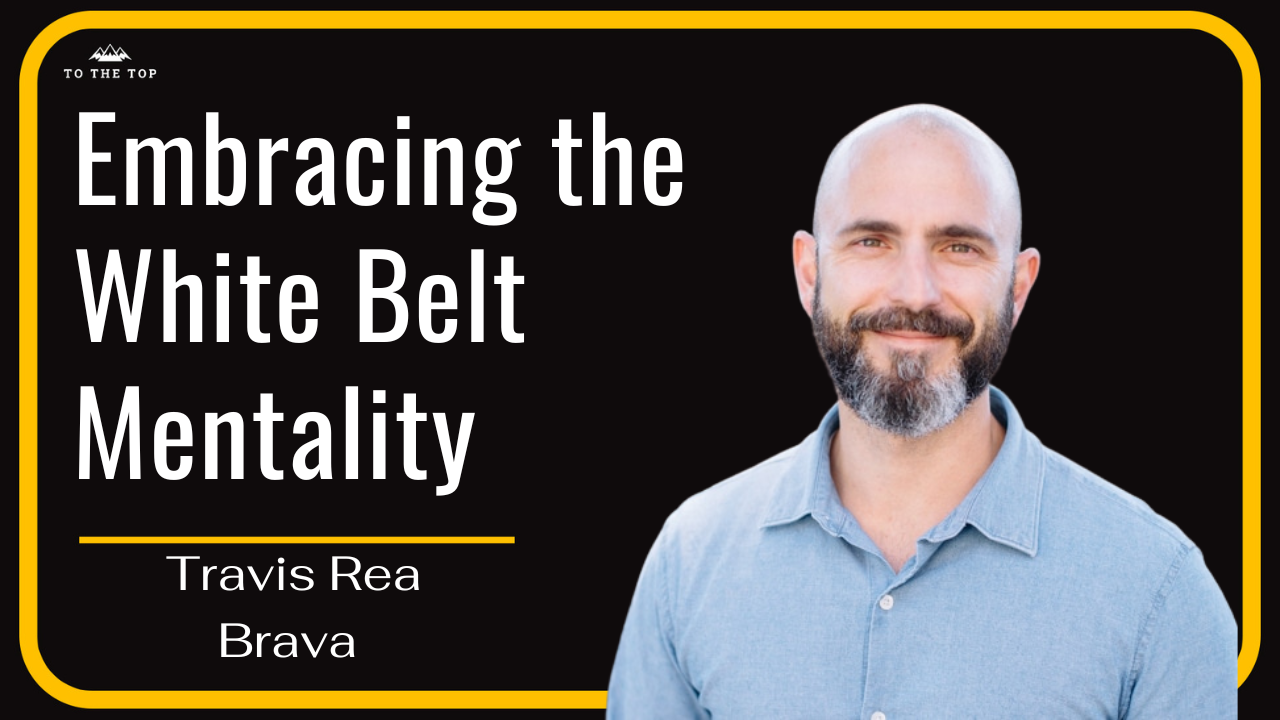
What happens when a classically trained chef who cooked at Michelin-starred restaurants decides the future of cooking isn't fire—it's light?
Today's guest is Travis Rea, Head of Culinary at Brava, the company that's reimagining home cooking with an oven that uses infrared light instead of traditional heat. But Travis's path to revolutionizing kitchen technology wasn't straightforward.
Born and raised in Houston, he grew up watching his mom cook from scratch and fell in love with the transformation of ingredients at just eight years old. That passion led him to ditch a conventional business career for culinary school in San Francisco, where he spent four grueling years cooking at Restaurant Gary Danko—eventually helping the restaurant earn its Michelin star.
But after years of vampire hours and relentless pressure, Travis made a bold pivot back to the business world, spending eight years at Williams-Sonoma developing over 800 food products and collaborating with legendary chefs like Thomas Keller. When he first heard about Brava—a startup claiming they could sear a steak in seven minutes using light bulbs—he thought it was "total nonsense."
Now, eight years later, Travis has helped build a product that's been used over 13 million times, with a digital library of 9,000+ recipes. This is a story about knowing when to pivot, surrounding yourself with people smarter than you, and why the best career moves often require you to embrace being a beginner all over again.
What You'll Learn in This Episode:
How failing a class became the wake-up call that changed everything – Why Travis's freshman year failure was "one of the best things that happened" to him and taught him the importance of living up to his own potential
The real cost of following your passion – Why Travis walked away from Michelin-starred kitchens after realizing he loved cooking but couldn't sustain the restaurant lifestyle for 30 years
How to know when you're ready for a pivot – The signals Travis noticed (and ignored) that revealed he was reading cookbooks while his peers read marketing journals, and what that meant for his career
Why working for the best matters more than the biggest paycheck – Travis's philosophy on taking lower-paying jobs at elite organizations early in your career and how it compounds over time
The white belt mentality in action – What it's like to be the only "cook" in a house full of physicists and engineers, and why being the least qualified person in the room might be exactly where you need to be
Time-Stamped Show Notes
[00:00 - 05:30] Growing Up in Houston & The Love of Cooking
Born and raised in Houston, Texas
Father was a cardiovascular thoracic surgeon, mother was a home cook and baker
First cooking memory: making eggs with his mom at age 8
Watching the transformation of liquid egg to solid "blew my mind"
Mom's signature dish: dinner rolls dipped in melted butter
Early exposure to fresh ingredients and farmers markets shaped his palate
[05:30 - 12:00] Education as a Non-Negotiable Value
Parents met in college; education was always the top priority
Attended elite college prep school in Houston
The lesson: "They can't take education away from you"
Being a solid B student who learned how to write
Choosing Trinity University over University of Colorado Boulder
"I knew myself - I would fail out in a year at a party school"
[12:00 - 18:30] The Failure That Changed Everything
Failed freshman writing workshop despite it being his strongest subject
Didn't turn in three papers after finishing fraternity pledging
Parents' disappointment was hard, but his own disappointment was worse
Confronted professor: "I'm not the guy you think I am"
Retook the class and earned an A
"That sting hurt" - became the wake-up call that transformed his approach to education
Switched from English major to marketing and business
[18:30 - 24:00] The Pull Toward Culinary School
Spent college years reading cookbooks while peers read marketing journals
Watching Julia Child and Jacques Pépin instead of typical TV shows
Did restaurant work and thought "no way, these guys work too hard"
Internship in public relations/advertising - "I hated it"
Realized: "I'm reading cookbooks for fun, not AdAge"
Dinner with parents: "I have to go to culinary school"
Parents' response: "This will be your grad school"
[24:00 - 30:00] Culinary School & Arriving in San Francisco
Looked at Culinary Institute of America in New York vs. California Culinary Academy
"I don't like snow, I'm not a cold guy"
Visited San Francisco as an adult: "Within 24 hours I was like, yeah, that's where I'm going"
Started culinary school summer of 2001
Bay Area had just experienced the dot-com bust
Friends working in tech while he pursued cooking
[30:00 - 38:00] Breaking Into Restaurant Gary Danko
Did a stage (internship) at Gary Danko after eating there with parents
Loved the style: revolutionary menu format, formal but not stuffy
Told sous chef: "I'll do anything" and "I'm gonna keep doing this until you give me a job"
Started in pastry under Belinda Leon (now James Beard Award winner)
Spent one year in pastry before moving to the hot line
Pastry made him "more meticulous" and changed how he approached cooking
[38:00 - 45:00] Lessons from Belinda Leon & the Pastry Station
Greatest lessons: perseverance, repetition, focus, and speed
"I was meticulous but not fast" - had to work hard on speed
Making dozens of different items daily: crème brûlée, ice creams, soufflés
The camaraderie and internal competition
Contest to see who could make the most beautiful egg whites
Team of three to four people on pastry
[45:00 - 52:00] The Crucible of the Hot Line
First night on fish/veg station: "I felt like I was drowning"
The sound of the ticket machine: "My seventh level of hell"
Major mistake: strained butter-water mixture directly onto the flat top
Caused smoke and fire on first night
Sous chef: "Sink or swim time, what are you gonna do?"
"I knew I wasn't gonna quit"
Slowly got better through repetition and persistence
[52:00 - 58:00] Working with Gary Danko & Earning the Michelin Star
Gary gave cooks creative freedom to put dishes on the menu
"Find a way to say yes" - the hospitality mentality
Gary's lesson: "I will never experiment on my guests"
This was around when sous vide was becoming popular (2004)
Gary wasn't a tyrant but held the line when needed
"Chef means chief - they are the one in charge"
Was there when restaurant earned its Michelin star
Michelin inspectors are completely undercover - "you don't know who they are"
[58:00 - 63:00] The 1 AM Wake-Up Call
After four years at Gary Danko, cleaning cutting board at 1 AM
"What am I doing? I have a business degree"
Realized he wasn't willing to put in 30 years to get to Gary's level
Loved the idea of having his name on the door, but not the path to get there
The lifestyle was taking its toll: vampire hours, no social life, hard to maintain relationships
"I felt like a cooking robot and it was taking away the joy"
The pressure and lifestyle worked for some, but not for him
[63:00 - 70:00] Pivoting to Williams-Sonoma
Best friend's aunt's best friend's daughter worked at Williams-Sonoma
Initially interviewed for assistant buyer position for cookbooks
Redirected to Food Development department during interview
Started as merchandise coordinator (entry-level retail buyer role)
Food Development was different: created Williams-Sonoma branded products
Filled holes in the market with new concepts
Example: Created slow cooker sauces to complement All-Clad slow cooker launch
[70:00 - 76:00] Rising at Williams-Sonoma
Manager left after one year - Travis asked for the job
Boss: "I don't know if you're ready"
Travis: "Just give me a chance"
Did the job for three months before officially getting the role
Ran the team for seven years
Launched over 800 unique SKUs in eight years
Got to work with Thomas Keller, Tom Colicchio, and other celebrity chefs
His Gary Danko background gave credibility: "I spoke the same language"
[76:00 - 82:00] The Flour & Water Cookbook
Cooked with Thomas McNaughton at Gary Danko
McNaughton opened Flour & Water, started getting acclaim
Dinner conversation: Tom mentioned thinking about a cookbook
Travis: "Do you need any help? I don't know anything about pasta"
Became lead recipe tester and writer
Would watch Tom or other chefs make dishes and document everything
"Proving you could take restaurant concepts and translate them to home cooking"
Flour & Water: 15 years old, specializes in handmade pasta and Neapolitan pizza
[82:00 - 88:00] Revolution Foods & NatureBox
Left Williams-Sonoma after eight years - wanted to advance and do something different
Revolution Foods: served healthy school lunches to underprivileged kids
Great company but "the work wasn't the best fit for me"
Moved to NatureBox: "Netflix of snacks"
First D2C (direct-to-consumer) company experience
Exposed to e-commerce, venture capital, startup culture
First time working closely with software engineers and product teams
Wife was pregnant with first child when he started (2015)
[88:00 - 95:00] Discovering Brava: "Total Nonsense"
Heard about company building smart oven that cooks with light
Could sear a steak in seven minutes
Travis's reaction: "That sounds like total nonsense"
"You can't cook something with a light bulb - Easy Bake Oven, haha"
Didn't even know what IoT (Internet of Things) was - had to look it up
Was referred by former Williams-Sonoma test kitchen director
Very skeptical going into the interview
[95:00 - 102:00] The House in Newark & First Week
Company operating out of a house in East Bay (Newark, California)
Interviewed in a bedroom
Building prototype in garage with welding masks
"20 dudes at standup desks - felt like the show Silicon Valley"
Surrounded by people "deep in physics and mathematics"
When they did the demo: "It blew my mind - it actually did what they said"
Joined as first culinary hire, Head of Culinary
First week at Brava was the company's first week having an office
[102:00 - 107:00] The $20 Million Demo
Had exactly four days to prepare for investor demo
Didn't realize the stakes - it would land nearly $20 million
Cooked filet mignon with potatoes and broccoli
Showed multi-zone cooking capability
Engineers controlling it through computer, but simple "push start" for demo
Investors were "blown away" - same reaction Travis had when he first saw it
"I couldn't believe what I was seeing"
[107:00 - 114:00] Building Brava: Milestones & Memories
First units arriving from manufacturer - team cracked champagne
Fire engine alarm/siren for every sale that came in
Launched with meal kits to ensure perfect first experience
"The best meal kits the market has ever seen - also the most expensive"
Multiple meal kit partners folded - had to pivot repeatedly
Eventually got out of meal kit business entirely
Started with ~100 recipes in 2018, now over 9,000 recipes
[114:00 - 120:00] How All Experience Compounds
Question: Does everything feel like it led to this moment?
"Without those previous experiences, I don't know if I would've succeeded"
Restaurant experience: necessary to run a team of chefs
Standards of excellence from restaurant industry
"We can accomplish the impossible if we work together"
People initially worried he was overqualified at Williams-Sonoma
"They had to kick me out at night - I wasn't used to working only eight hours"
[120:00 - 126:00] The White Belt Mentality
Surrounded by experts in mechanical engineering, electrical engineering, physics, software
"The beginner, the white belt mentality"
"I don't want to say least qualified, but feeling like I had something to prove"
Expectation of excellence felt familiar from restaurant world
"I didn't want to fail"
Started jujitsu a year ago - actually a white belt now
Assistant coaches for his kids' jujitsu
[126:00 - 132:00] Major Milestones at Brava
Launching the product in 2018
Brava Glass launch in 2023 (five years after initial launch)
Original had metal door due to flickering lamps
Software change made glass door possible but too late for first version
December 2024: V3 software update for accessibility
Partnered with San Francisco Lighthouse
Screen readers allow blind and low-vision users to navigate app
Can cook steaks and grilled cheese independently
[132:00 - 138:00] Explaining the Technology
Cooks with infrared light using lamps designed for solar industry
Lamps can melt metal in seconds
Go from ambient to full power in less than one second
Over 4,000 degrees Fahrenheit at core of bulb
"Same power delivery as 900-degree wood-fired pizza oven"
Software controls pulsing: brings surface temp up, cools off, pulses again
Like a chef moving food in and out of a wood-fired oven
"Same energy as what comes off the sun - just focused and precision-controlled"
[138:00 - 142:00] Health & Safety Questions
Not using microwaves or magnetrons
Uses visible and invisible spectrum of infrared light
"Same energy that comes off the sun"
"Same things humans have been cooking with since we started - fire"
Just more focused and intense
No strange waves being generated
Common question: "It sounds too good to be true"
[142:00 - 147:00] Who Is Brava For?
Hardest question to answer: "Who's your target market?"
Answer: "People who like to cook at home"
No specific age demographic
Initially thought it would be for people who don't want to cook
Realized: "You're not gonna get somebody to cook that doesn't like cooking"
Core customer already enjoys cooking
Tend to be tech-savvy early adopters
Quality keeps them coming back
Over 13 million times the start button has been pushed
[147:00 - 152:00] Lessons on Iteration & Growth
"Don't try and eat the whole cake all at once"
Launched with 100 recipes in 2018
If told they'd need 9,000 recipes by 2025: "I might've said that's not possible"
IoT product can be updated continuously
"We didn't get everything right out of the gate"
Finding what you're good at that others find difficult
Being willing to pivot through challenges
[152:00 - 157:00] The Underbelly of Every Passion
Honeymoon in Thailand - envied scuba diving instructors
"These guys have made it - best life"
Then heard them bickering about internal politics
"Oh my God, it's here too. It's in everything"
Find which challenges you can tolerate
"Turn the challenge into something you can make good on"
Passionate about cooking but didn't want to cook 14 hours a day
[157:00 - 162:00] Mental Health & Physical Fitness
Weight training for 17 years
Jujitsu for past year
"The weights don't lie, just like the mats don't lie"
Weaknesses come out quickly - it's humbling
At 47, dealing with tweaks and injuries - "willing to start over again"
Walking: didn't start until the pandemic
Morning walks before work replaced commute podcast time
"Low dose cardio but it adds up"
[162:00 - 165:00] The Power of Walking
Biggest mental health lever you can pull
"Go for a walk even if it's 10 minutes"
"Exercise snacks" - walk after every meal
"It adds up through the day and you end up feeling a lot better"
Clears your head when stuck on a problem
Come back with fresh perspective and fresh attitude
[165:00 - 170:00] Book Recommendations
Meditations by Marcus Aurelius - "a go-to"
Leo Tolstoy's Calendar of Wisdom - on bedside table
All of Ryan Holiday's books
Lives of the Stoics by Ryan Holiday - "great primer"
Got back into reading during pandemic
Loves history now (didn't like it in high school)
Currently reading: A Night to Remember about the Titanic (1955)
Written by Walter Lord who interviewed 60 survivors
Extreme Ownership by Jocko Willink
Atomic Habits by James Clear
[170:00 - 175:00] Why Atomic Habits Resonates
"The teacher arrives when the student is ready"
"So much valuable advice in there"
James Clear's Thursday newsletter is excellent
James sold 20 million books recently
Took Stephen Covey 20 years to sell same amount with 7 Habits
Ryan Holiday makes stoicism accessible
"Tells stories and it just clicks"
[175:00 - END] Final Career Advice for Young Professionals
Find the intersection of interest and skill
Not just what you're good at - what are you interested in?
If there's intersection, it's a signal
Consider: Is there a career here? Can I make money? Can I make enough?
Don't let money be the only defining factor
"I never would've gone to culinary school if I let money decide"
Work for the best and work hard
Willing to sacrifice early on pays off later
Go all in once you get the signal
"Work harder than the people around you"
"Work harder than you think you can"
Don't give up, but be willing to pivot
Don't be so stubborn you end up doing something you hate
Reach out to your network
"Everybody needs a coach sometimes"
Coach could be mentor, boss, or even books you read
Never be the wisest person in the room
"I don't ever want to be the wisest person in the room"
Prefer to be the beginner even though it's uncomfortable
Especially important with new tools and AI coming out
Can make really good things without being an expert
Take risks, especially early
"You can overanalyze and never do anything"
Take chances and risks early when you can afford lower pay
"Don't be afraid to take risks later in life either"
Without risk, the meaning won't be as rich
Need "skin in the game" for work to be meaningful